
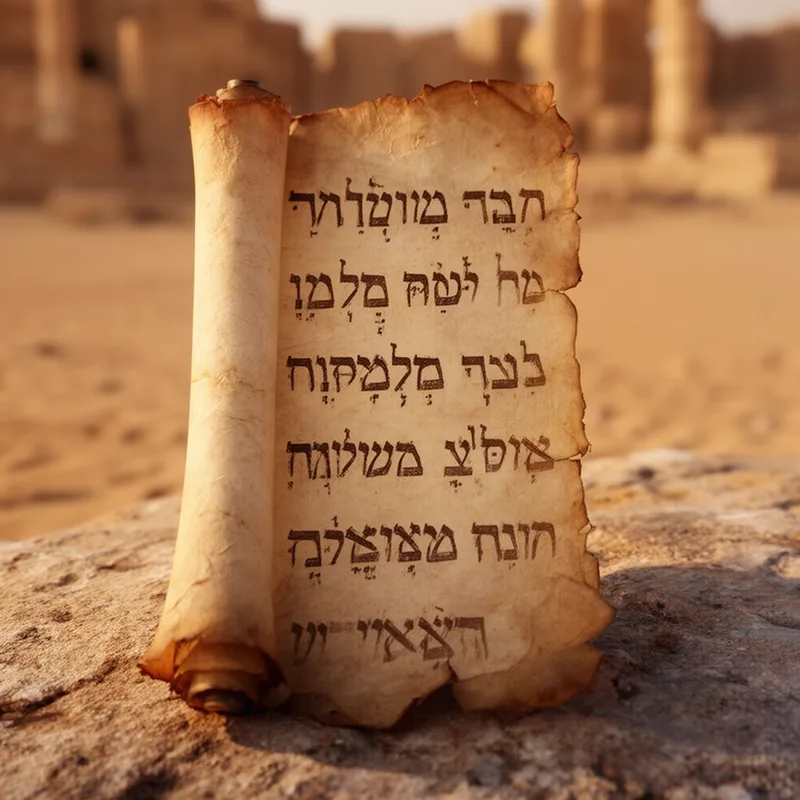
Aramaic
 8
9.4
8
9.4

- noun
- /ˌærəˈmeɪɪk/
- What's interesting about his name is that Thomas derives from the Aramaic word for twin.
- Aramaic is still spoken
- Hebrew and Aramaic
Loading YouTube…
Watch on YouTubeWhich in Aramaic, the brow was called the Nazar.
- Which in Aramaic, the brow was called the Nazar.
- And one of the ways to prove this is that it quotes another Gospel in Aramaic.
- It's because I like Aramaic, which is closer to my native language, the Levantine dialect.
- Why do you think in Aramaic, in Latin and in, in, in the Hebrew language, the word breath is the same as spirit.
- It's difficult, isn't it, for us to discern what as it as it went through Aramaic to Greek to King James.
- Now I want you to type this in Aramaic word for God and watch what pops up and let me teach you a lesson.
- And in the East, you have Greek and Aramaic and Coptic and, and, you know, translating terms back and forth, theological terms can sometimes be a bit tricky.
Examples
-
She spoke Aramaic on the tape.
-
But... this part looks like Aramaic.
-
Did he say it that in Aramaic?
-
Keep in mind that the long version is in Aramaic.
-
-And he can read and write Aramaic?
-
The language of Judaism is Hebrew and Aramaic from that time forward.
-
And I need your help translating the Aramaic.
-
Today, the general scholarly consensus is that the original language of Revelation was Aramaic.
Academic text (2015) -
The Babylonian Talmud is written in Aramaic; it is the language that Jesus speaks.
Academic text (1998) -
Today, some communities in the Middle East still speak Aramaic, which is a Semitic language.
Synonyms

A language from the Middle East once spoken by ancient Arameans and still used by some people
Compounds

- Specialized

 1
9.8
1
9.8
An ancient alphabet used to write Aramaic that influenced many later scripts

- Specialized
A form of Aramaic used in parts of the Hebrew Bible and spoken in ancient Palestine

A modern form of Aramaic spoken by Assyrian people in northern Iraq and nearby areas
A language from the Middle East once spoken by ancient Arameans and still used by some people
Surface Forms
Morphology
Etymology
Aramaic comes from Aram, the name of an ancient region and its people in the Middle East, so Aramaic literally means 'from Aram' and is the language those people spoke, which is why small communities still use it today.