
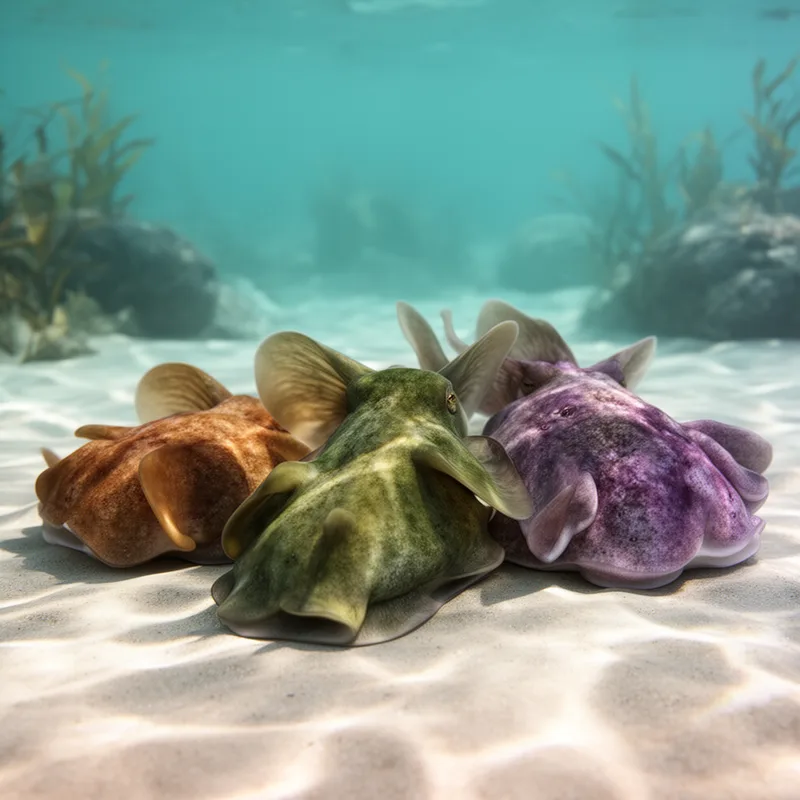
Aplysiidae
- noun
- /ˌæplɪˈsiːəˌdeɪ/
- Specialized
- The Aplysiidae family, commonly referred to as sea hares, can often be found in shallow coastal waters.
Examples
-
The Aplysiidae family includes various species of sea hares.
-
The Aplysiidae family includes several species that are studied for their unique nervous systems.
-
A common inhabitant of shallow coastal waters, Aplysiidae species are often identified by their large, soft bodies.
-
Many marine biologists have researched the chemical defenses used by Aplysiidae to deter predators.
-
Did you know that Aplysiidae can change color?
-
Many marine biologists study the unique behaviors of Aplysiidae, which are known for their soft bodies and striking colors.
-
The soft-bodied Aplysiidae are fascinating creatures that have developed chemical defenses to protect themselves from predators.
Synonyms


 1
9.1
A large soft sea animal like a slug that can release purple ink when scared
A group of large sea animals like slugs with soft bodies called sea hares
Compounds
- Specialized
A group of large sea animals like slugs with soft bodies called sea hares
Surface Forms
Morphology
Aplysiidae = Aplysia (opaque) = Aplysia + idae
The suffix '-idae' is a specialized taxonomic family-forming ending; without knowledge of biological classification, learners will not infer 'family of Aplysia' from the parts.
Etymology
Aplysiidae comes from the genus name Aplysia and the scientific ending -idae, which means 'family' in biology. The name Aplysia means 'sea hare' because these animals have soft bodies and ear-like flaps, so the family name helps you remember they are large, soft, hare-like sea slugs.