
Anthropocene
 1
9.7
1
9.7

- noun
- /ˌænθrəˈpoʊsiːn/
- Specialized
 :
Antropoceno
:
Antropoceno
- They will find what geologists, scientists and other experts are increasingly calling the Anthropocene, or New Age of mankind.
- Anthropocene era
- Anthropocene crisis
How poor people get rich will strongly shape the Anthropocene.
- How poor people get rich will strongly shape the Anthropocene.
- People call this the Anthropocene right now, where we've managed to really disrupt the, the, you know, the, the world that we live in.
- My concern is precisely to explore religious experience in this context of crisis and calamity religion at the dawn of the Anthropocene.
- E for the abyssal eons scribbled in the road cuts the Anthropocene's antecedents abridged.
Examples
-
The question is whether past trends of increasing prosperity can be broadened and sustained as the Anthropocene matures.
Academic text (2005) -
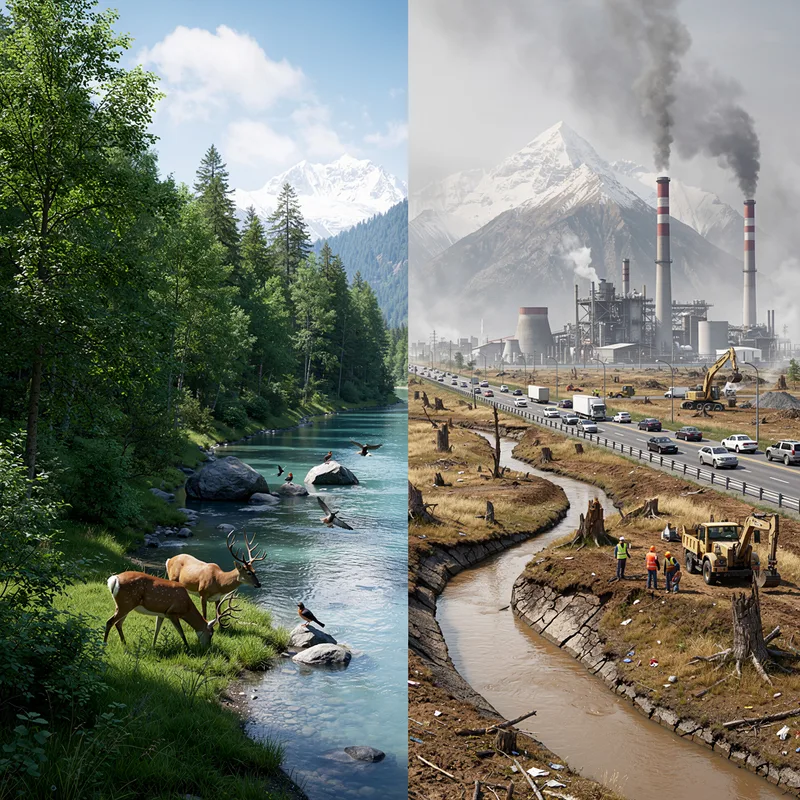
The term Anthropocene refers to the era in which human activities are the dominant influence on the climate and environment.
-
What are the main challenges of being a researcher and teacher in the age of the Anthropocene?
Academic text (2017) -
Writing about climate change and the Anthropocene, however, confronts writers with formal challenges.
Academic text (2018) -
People call this the Anthropocene right now, where we've managed to really disrupt the, the, you know, the, the world that we live in.
-
I just wonder how far the Anthropocene extends considering the fact that man's landed on the moon.
-
There is debate among scientists who endorse the Anthropocene epoch about when precisely it began.
Academic text (2011) -
Imagining the Anthropocene means imagining "the end of social memory, hence the loss of social mourning."
Academic text (2018) -
Scientists are studying the Anthropocene to understand how human actions have changed the planet.
-
The Anthropocene marks a significant shift in geological time, highlighting the impact of human civilization on Earth.
Synonyms


 1
9.4
1
9.4
A time in Earth's history about the last two million years when humans lived and changed the world

A rude slang name for the present time that shows how people harm the planet
Surface Forms
Morphology
Anthropocene = anthropo + cene
The word is built from Greek combining forms meaning 'human' + an epoch-forming suffix; the parts map clearly to the concept but are not productive standalone English words for average learners, so the relation is only partially accessible.
Etymology
Anthropocene joins two Greek parts: anthropos ('human') and -cene ('new era'), the same anthro- you see in anthropology and the -cene in Holocene. So Anthropocene means a 'new' geological time shaped mainly by people.