

Amorphophallus paeonifolius
- noun
- Specialized
- Farmers in the region cultivate Amorphophallus paeonifolius for its large edible tubers.
Examples
-
The flower of Amorphophallus paeonifolius is known for its strong, putrid odor.
-
In Filipino cuisine, Amorphophallus paeonifolius is sometimes used in traditional stews.
-
The Amorphophallus paeonifolius is often called the corpse flower.
-
Many people find the smell of Amorphophallus paeonifolius quite unpleasant.
-
Farmers in the region cultivate Amorphophallus paeonifolius for its large edible tubers.
-
In Filipino cuisine, Amorphophallus paeonifolius is sometimes used in traditional stews.
-
The flower of Amorphophallus paeonifolius is known for its strong, putrid odor.
Synonyms
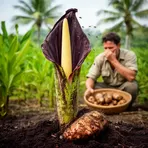
A tropical plant with a very bad smell grown for its edible root

A large plant from Asia with a strong smell grown for its edible root

A plant with a very strong smell grown in Southeast Asia for its edible root like a potato
Surface Forms
Morphology
amorphophallus + paeonifolius
This is a Latin binomial (genus + species) referring to a specific plant; knowing the genus label 'Amorphophallus' as a plant term does not let a B1 learner infer the species identity, properties (foul-smelling flower, edible tuber), or the common name 'corpse flower'. The species epithet is not a transparent English word and the overall referent is arbitrary and encyclopedic rather than compositionally derived, so the meaning cannot be predicted from the parts.
Etymology
Amorphophallus paeonifolius gets its name from old Greek and Latin parts: amorpho- ('odd-shaped') + phallus (a long central stalk) and paeoni- + -folius ('peony-like leaves'). So the name paints an easy picture — a plant with a strange, smelly flower stalk and leaves like a peony, which helps you remember this smelly plant with an edible root.

