
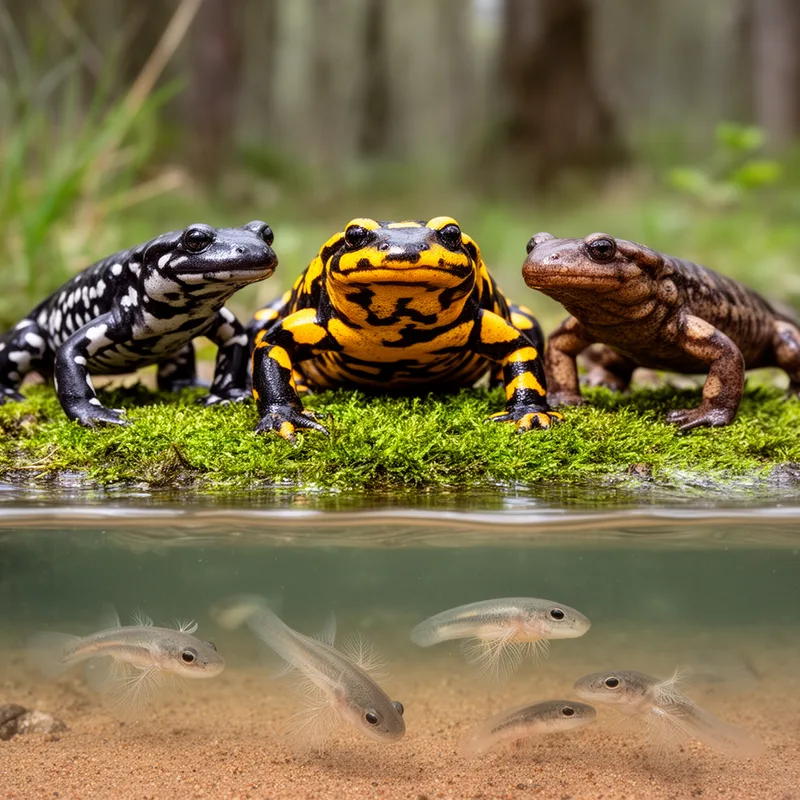
Ambystomatidae
- noun
- /æmˌbɪstəˈmætɪdeɪ/
- Specialized
- The tiger salamander, part of the Ambystomatidae, is found throughout North America.
Examples
-
Researchers are studying the development of limbs in Ambystomatidae to understand regeneration.
-
The Ambystomatidae family comprises several salamander species that thrive in wetland habitats.
-
Members of the Ambystomatidae family are known for their distinctive larval stages.
-
The Ambystomatidae family includes various species of salamanders.
-
Many Ambystomatidae species are found in North America.
-
Scientists are documenting the behavior of Ambystomatidae during their mating season.
-
Conservation efforts focus on protecting the various Ambystomatidae species that are threatened by habitat loss.
Synonyms
A group of North American salamanders that live in burrows, called mole salamanders
Compounds
- Specialized
A group of North American salamanders that live in burrows, called mole salamanders
Surface Forms
Morphology
Etymology
Ambystomatidae comes from the Greek parts amblys ('blunt') and stoma ('mouth'), so the name literally means 'blunt mouth' and gives a simple image to remember these salamanders. The ending -idae means 'family', so Ambystomatidae is the animal family that includes the tiger salamander.

