

Ambystoma
- proper noun
- /æmˈbɪstəˌmə/
- Specialized
- Species used for experimental studies included the spotted salamander (Ambystoma maculatum), northern leopard frog (Rana pipiens), and wood frog (Rana sylvatica).
- Ambystoma salamander
- tiger salamander
Examples
-
Each spring, the Ambystoma species migrate to breed in temporary ponds across North America.
-
The axolotl, scientifically known as Ambystoma mexicanum, is famous for its regenerative abilities.
-
- You think it's the Ambystoma gene? - It might be.
-
Green fluorescent protein (GFP) transgenic axolotls were obtained from the Ambystoma Genetic Stock Center (AGSC).
Academic text (2018) -
In the salamander Ambystoma talpoideum, for example, smaller size at metamorphosis was associated with both smaller size and greater age at first reproduction (Semlitsch et al. 1988).
Academic text (1998) -
and found that the embryos of the spotted salamander (Ambystoma maculatum) incorporate an algae (Oophila amblystomatis).
Blog text (17) -
Axolotls (Ambystoma mexicanum) with a nose-to-tail length of 8-12 cm were obtained from private breeders and housed in aerated water at 22 degrees C.
Academic text (2018) -
In the study of amphibians, the Ambystoma genus is notable for its unique life cycles and behaviors.
Compounds

- Specialized
A black salamander with yellow spots that lives in North American woods

- Specialized
A type of salamander from Mexican lakes that keeps its gills and lives in water all its life

- Specialized
A large salamander from North America with dark body and yellowish tiger-like markings
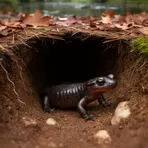
- Specialized
A small brownish-black salamander that lives underground in the southeastern United States
Surface Forms
Etymology
Ambystoma comes from the Greek words amblys ('blunt') and stoma ('mouth'), so the name literally means 'blunt mouth'. That simple image makes it easy to remember the genus that includes the axolotl and the tiger salamander.

