
Amarna


 1
9.9
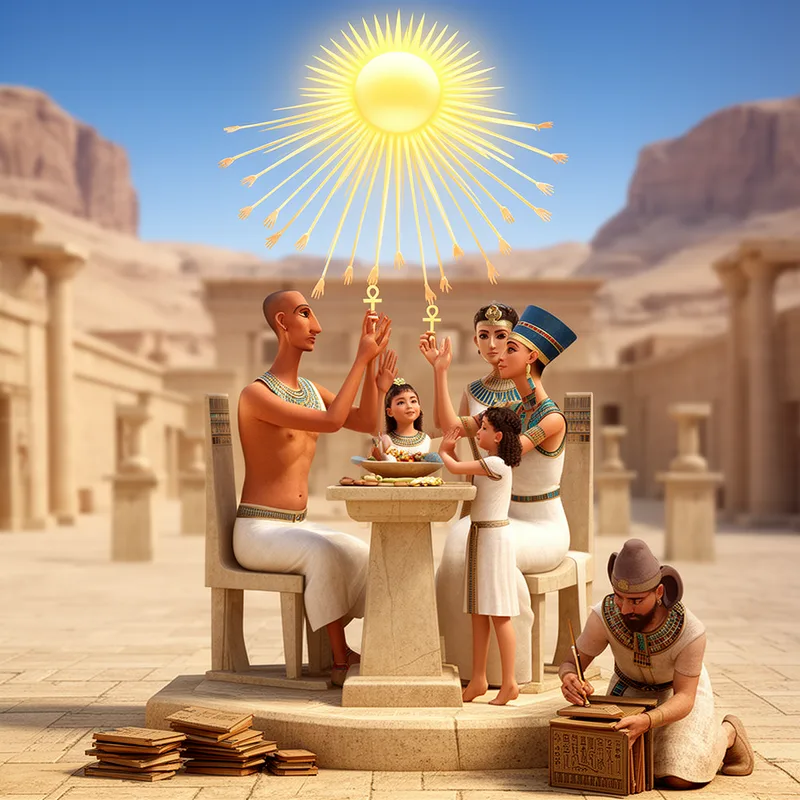
About the art, life, and religious changes under Pharaoh Akhenaten
- adjective
- /əˈmɑrnə/
- Formal
:
amarna
- The discovery of Amarna tablets provides valuable insights into the political and diplomatic relationships of ancient Egypt.
Examples
-
Scholars are studying the Amarna period to understand the radical changes in religion and art during Akhenaten's reign.
-
Translations from The Amarna Letters, edited and translated by William Moran. Johns Hopkins University Press, 2002.
Academic text (2007) -
The Amarna art style is characterized by its unique portrayal of human figures and naturalistic representations.
Surface Forms
Amarna positive
Etymology
Amarna comes from the modern name for the ruins of Akhenaten's capital and from the old Egyptian name Akhetaten, which means 'Horizon of the Aten' or the sun. So when we describe a style or object as 'Amarna' we link it to the specific art, culture, and religious changes of Akhenaten's sun-centred time.