
Amarna
 2
9.9

- proper noun
- In that period, the capital was Thebes, and for a brief time in the fourteenth century B.C., it moved to Amarna when Akhenaten abandoned the old gods for his sun god, Aten.
- Amarna archive
Examples
-
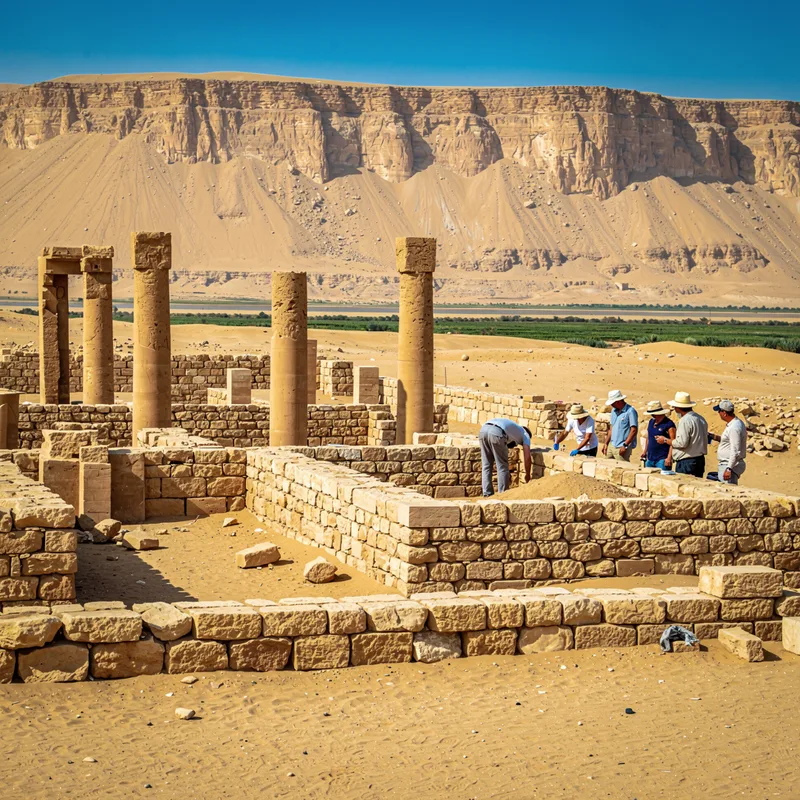
Excavations in Amarna have revealed many artifacts from the time of Pharaoh Akhenaten.
-
According to letters in the Egyptian Amarna archive of late-eighteenth-dynasty diplomatic correspondence, influential though Qatna may have been, it was still a small kingdom in a dangerous position—surrounded by heavyweights.
Academic text (2007) -
Now we can talk about el-Amarna.
-
Nor did Amarna's style vanish abruptly with Akhenaten's death.
Academic text (2006) -
When his successor Tutankhamun abandoned Amarna for Memphis, his artisans came as well to work on Saqqara's tombs.
Academic text (2006) -
Qatna is mentioned many times in cuneiform archives, including the royal archives at Mari in Syria and the Egyptian archive at Amarna.
Academic text (2007) -
PHOTO (COLOR): The clay tablets of the Amarna archive are diplomatic correspondence, including letters in which Prince Akizzi of Qatna pleads in vain for help from the Egyptians.
Academic text (2007) -
Visitors to Amarna can see the ruins of the temples built to honor the sun god Aten.
-
The archaeological site of Amarna showcases the unique architectural style of ancient Egypt.
Surface Forms
Etymology
Amarna is the modern name, from Arabic Tell el-Amarna, for the ruins of the city built by Pharaoh Akhenaten, and the city's old name Akhetaten meant 'Horizon of the Aten', the sun. So Amarna refers to that real place where archaeologists find the buildings and objects of Akhenaten's capital.