
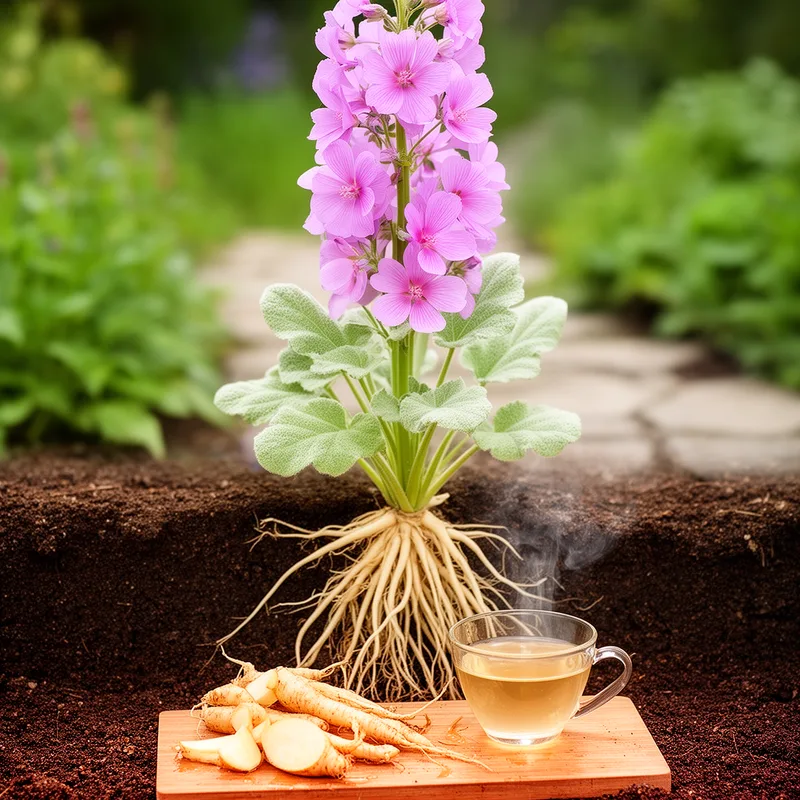
Althea officinalis
- noun
- Specialized
- Gardeners appreciate Althea officinalis for its delicate lilac-pink blossoms in summer.
Examples
-
The roots of Althea officinalis have traditionally been used to soothe sore throats.
-
I found some Althea officinalis growing near the pond.
-
Researchers are studying the medicinal properties of Althea officinalis extracts.
-
Look at the Althea officinalis!
-
Gardeners appreciate Althea officinalis for its delicate lilac-pink blossoms in summer.
-
The roots of Althea officinalis have traditionally been used to soothe sore throats.
-
I found some Althea officinalis growing near the pond.
Synonyms

A wild plant with soft leaves and pale pink flowers that grows in wetlands
A small European plant with pink flowers and triangular leaves that lives for many years
Surface Forms
Morphology
The compound is compositional: 'Althea' names the plant genus and 'officinalis' is a conventional Latin adjective indicating a medicinal species, so the phrase denotes the medicinal Althea (marsh mallow). Although botanical Latin is specialized, this meaning follows transparent, cross-linguistic scientific naming conventions and would be understandable to a B1 learner who knows both constituents.
Etymology
Althea officinalis comes from old words about healing: Althea comes from a Greek word meaning 'to heal' and officinalis was a Latin label for plants sold in 'old medicine shops'. People used this marsh mallow to soothe sore throats, so the name shows it was valued as a healing herb.

