
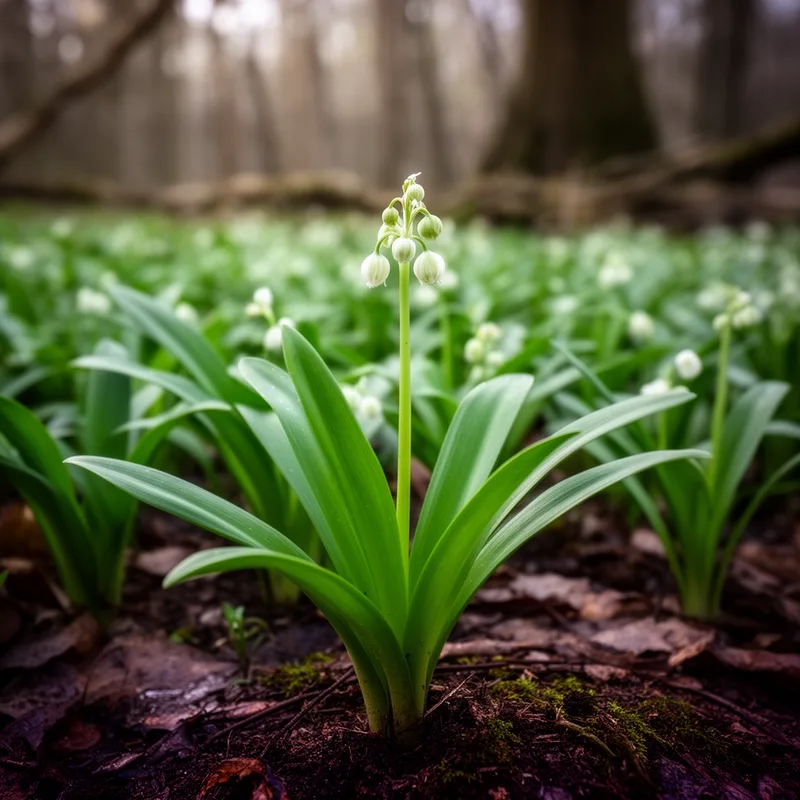
Allium paradoxum
- noun
- Specialized
- The woodland floor was carpeted with Allium paradoxum in early spring.
Examples
-
Allium paradoxum is prized for its edible leaves, but can be invasive outside its native range.
-
Gardeners sometimes find Allium paradoxum spreading quickly in moist, shady areas.
-
The Allium paradoxum grows abundantly in the wild.
-
Have you ever seen Allium paradoxum in bloom?
-
Allium paradoxum is often found in forested areas and is known for its strong garlic flavor.
-
In the spring, Allium paradoxum forms dense clusters of green leaves that are a delight for foragers.
-
The unique taste of Allium paradoxum makes it a popular choice for adding flavor to salads and dishes.
Synonyms

A small onion-like plant that makes tiny bulbs instead of flowers
Surface Forms
Morphology
Allium + paradoxum
The compound clearly signals membership in the Allium genus (garlic/onion family), so a learner who knows 'Allium' can infer it is a type of Allium plant. However 'paradoxum' is a Latin species epithet (and not a common English word) that does not transparently convey the specific biological detail (producing bulbils instead of flowers), so the full, precise meaning cannot be derived from the constituents alone.
Etymology
Allium paradoxum comes from Latin words: Allium means 'garlic' and paradoxum means 'strange'. One popular memory hook is that this wild garlic makes little bulbs where you would expect flowers, so the name points to that odd way it grows.

