
Ajuga reptans
- noun
- Specialized
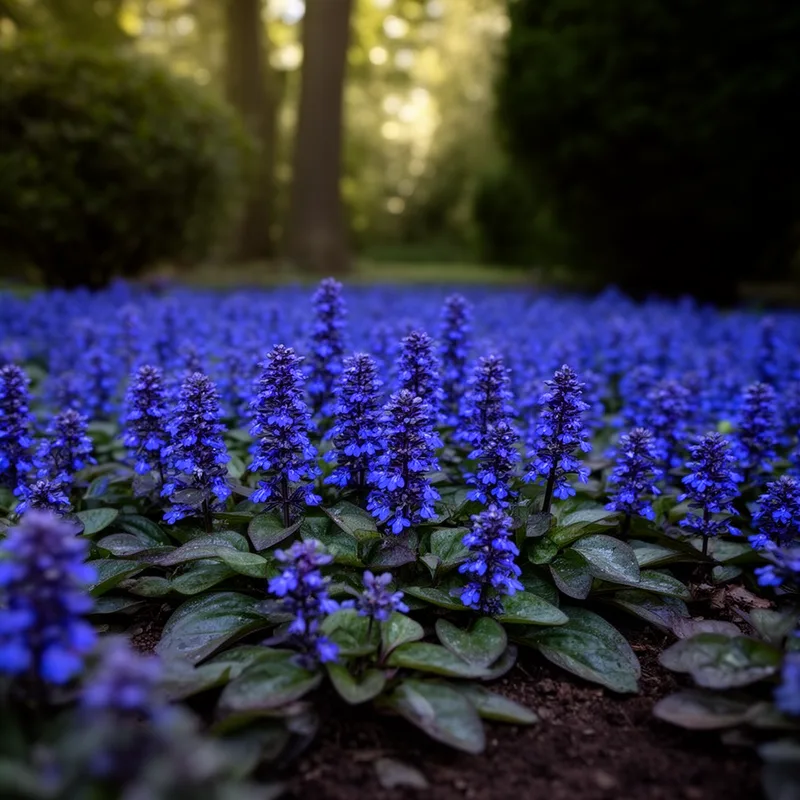
- The vibrant blue flowers of Ajuga reptans provide early spring color in many landscapes.
Examples
-
Ajuga reptans quickly spreads to form a dense carpet of blue in shady garden areas.
-
Gardeners often choose Ajuga reptans for its attractive foliage and low maintenance requirements.
-
The garden was filled with Ajuga reptans blooming beautifully.
-
You should consider planting Ajuga reptans for ground cover.
-
Ajuga reptans creates a beautiful blue carpet that thrives in shady spots of the garden.
-
Many gardeners appreciate Ajuga reptans for its vibrant blue flowers that blossom in early spring.
-
As a low-maintenance option, Ajuga reptans is often used to cover bare ground in landscapes.
Synonyms

A low plant with spreading stems and spikes of blue flowers that covers bare ground

A low, spreading evergreen plant used to cover the ground in gardens
Surface Forms
Morphology
Ajuga + reptans
The binomial combines a genus name (Ajuga, a ground-cover herb) with a Latin species epithet 'reptans' (literally 'creeping'), so the overall meaning 'a creeping/low-growing Ajuga used as ground cover' is compositional in botanical terms. However, the species epithet is Latin and not part of ordinary English vocabulary, so a B1 learner would only access that meaning if they specifically recognize the Latin root; therefore the transparency is partial.
Etymology
Ajuga reptans comes from the old plant name Ajuga and the Latin word reptans, which means 'creeping'. So the name paints a picture of a low plant that 'creeps' across the ground to form a carpet of blue, and that is why gardeners use it as ground cover.

