
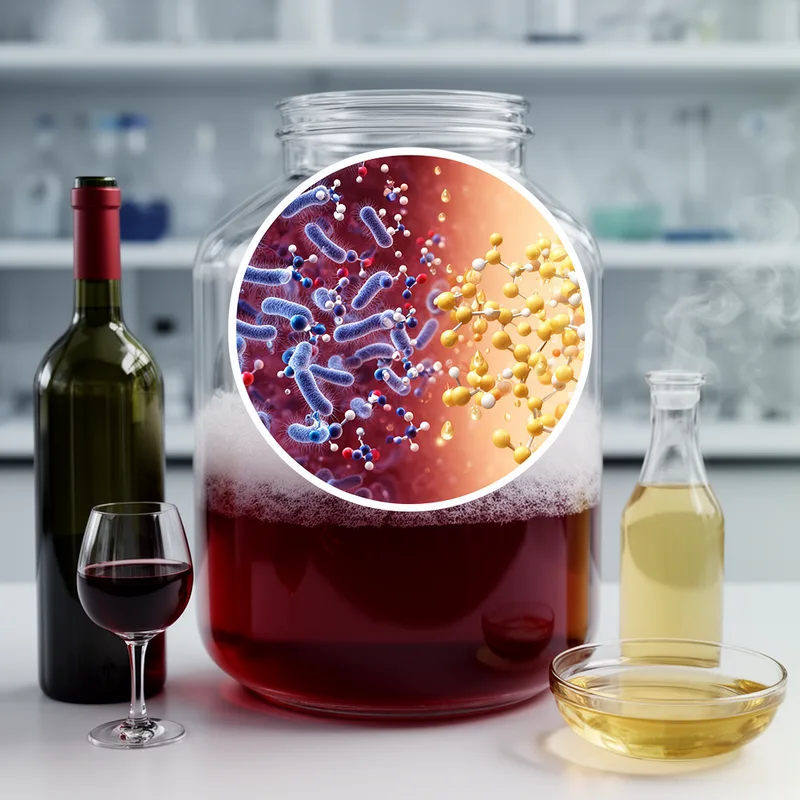
Acetobacter


 1
7.9
- proper noun
- /ˌæsɪˈtoʊbæktər/
- Specialized
- The bacterium Acetobacter is crucial in the production of vinegar, as it converts alcohol into acetic acid.
Examples
-
Members of the family Acetobacteraceae, these consist of two genera, Gluconobacter and Acetobacter (7, 8).
Academic text (1993) -
Finally, it was identified as a massive "pellicle," composed of a colony of Acetobacter xylinum bacteria and its fibrils of extracellular cellulose.
Academic text (1993) -
Some species of Acetobacter synthesize cellulose (6, 7, 9, 10, 11, 12, 13, 14, 15, 16, 17, 18, 19), one of the most abundant organic macromolecules on Earth, found in cell walls throughout the plant kingdom (7, 10, 13, 15).
Academic text (1993) -
The genus Acetobacter plays an essential role in fermentation processes to produce vinegar.
-
Researchers studied Acetobacter to improve the efficiency of acetic acid production from wine.
Surface Forms
Morphology
Etymology
Acetobacter comes from aceto- meaning 'vinegar' and -bacter meaning 'bacterium' or 'rod'. So, Acetobacter are the bacteria that turn alcohol into vinegar.