

Abyssinian banana
- noun
- Although its fruit is inedible, the flower shoots of the Abyssinian banana may be cooked and eaten in some cultures.
Examples
-
The Abyssinian banana is known for its large, paddle-shaped leaves.
-
The Abyssinian banana is grown mainly for ornamental purposes in tropical and subtropical gardens.
-
The broad leaves of the Abyssinian banana can create a dramatic focal point in any landscape.
-
In my garden, I planted an Abyssinian banana last spring.
-
In my garden, I planted an Abyssinian banana and enjoyed the beauty of its large, paddle-shaped leaves.
-
The Abyssinian banana is often used in landscaping for its striking foliage and tropical appearance.
-
While the fruit of the Abyssinian banana is not edible, the young flower shoots can be a delicacy in some cuisines.
Synonyms

A large African plant that looks like a banana tree with very big leaves and edible young shoots

A large African plant like a banana whose fruit people do not eat but whose young shoots people eat
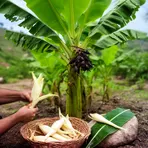
A large evergreen plant with big leaves whose fruit is not eaten but whose young flower shoots people eat
Surface Forms
Morphology
Abyssinian + banana
The phrase is compositionally built from the place-name adjective 'Abyssinian' (from Abyssinia/Ethiopia) plus the noun 'banana', so a learner who knows both constituents can infer it denotes a type or variety of banana associated with Abyssinia/Ethiopia. This place-name + noun pattern is cross-linguistically common for naming cultivars or regional plants, making the meaning directly derivable.
Etymology
Abyssinian banana gets its name from Abyssinian (the old name for Ethiopia) and from looking like a very large banana with huge, paddle-shaped leaves. People call it a 'false banana' because its fruit is usually not eaten but its young flower shoots can be cooked, so the name helps you picture a big, banana-like plant from East Africa often grown for its leaves and beauty.

