
AU
 1
7.4
1
7.4

- noun
- /eɪ ju/
- Specialized
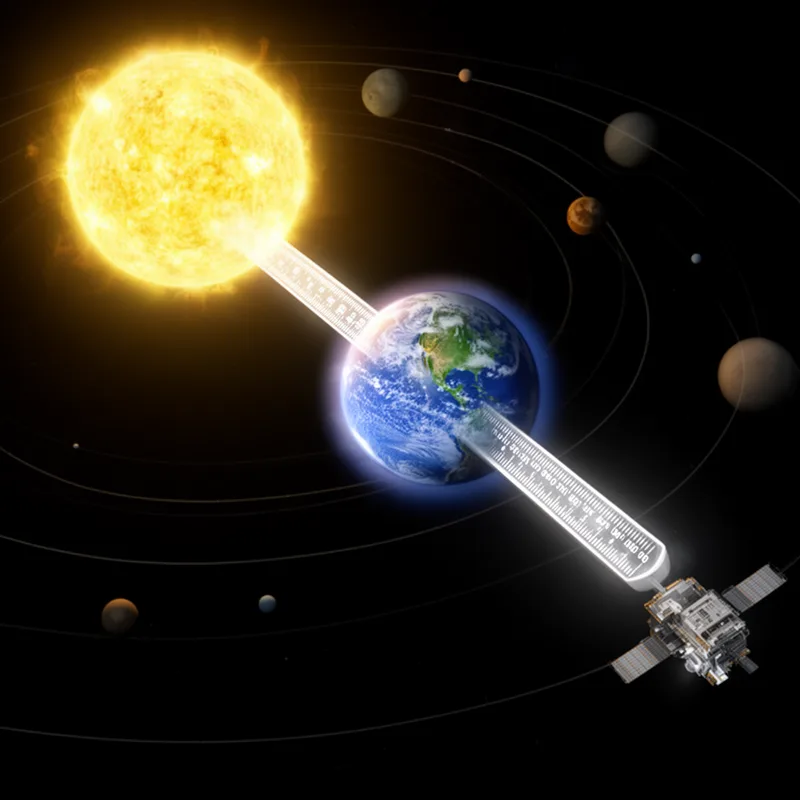
- Astronomers measure distances in space using units called AU, where one unit is about 93 million miles.
- about one AU
Examples
-
A 5 Jupiter-mass exoplanet, or perhaps a brown dwarf, this planet is 55 AU from its dim brown dwarf sun, which is a member of the TW Hydrae association of stars, all about 8 million years old.
Blog text (1) -
The planet is 0.1 AU from Fomalhaut, and not > 100 AU?
Blog text (1) -
This view is about 100 AU in diameter, where 1 AU or Astronomical Unit is the average distance between the Sun and Earth.
Academic text (2005) -
The disk, which appears as the two bright regions on either side of the blocked star, extends 80 to 300 AU out from the star.
Academic text (1992) -
This disk is about 180 AU in diameter, where 1 AU or Astronomical Unit is the average distance between the Sun and Earth.
Academic text (2005) -
A very distant planet orbits 55 AU from its brown dwarf sun, which has 25 times the mass of Jupiter.
Blog text (1) -
Other objects in this diagram of minor planets include numbered and unnumbered objects (green circles) and objects with perihelia within 1.3 AU (red circles).
Academic text (2005) -
So the radius of Earth's orbit around the sun would produce a viewing angle of 1 arcsecond if you're one parsec (which is the same as 206,264.8 AU) away.
Blog text (16) -
Located about 10,000 AU above the pole of the pulsar, the newly discovered ring may mark the boundary between two regions (polar and equatorial) of different winds from the pulsar, although exactly how they differ is unclear.
Academic text (1994) -
The distance from the Earth to the Sun is defined as 1 AU.
Synonyms
 1
6.5
1
6.5
The average distance between the Earth and the Sun, about 150 million kilometers

A unit of length equal to the average distance from Earth to the Sun
Idioms



Compounds

 7
5.8
7
5.8
A young person from another country who lives with a family and helps look after children for room and food


 1
8.6
1
8.6
A piece of beef covered in crushed pepper and cooked in a hot pan with a brandy and butter sauce


- Archaic

 1
6.3
1
6.3
A young woman who lives with a family and cares for children while getting room, food and a small payment



Surface Forms
Etymology
AU comes from the phrase astronomical unit, where astronomical means 'about stars and planets' and unit means 'one standard measure'. So, it names the average distance from Earth to the Sun, about 1 AU, and that's why astronomers use AU to talk about distances in the solar system.