
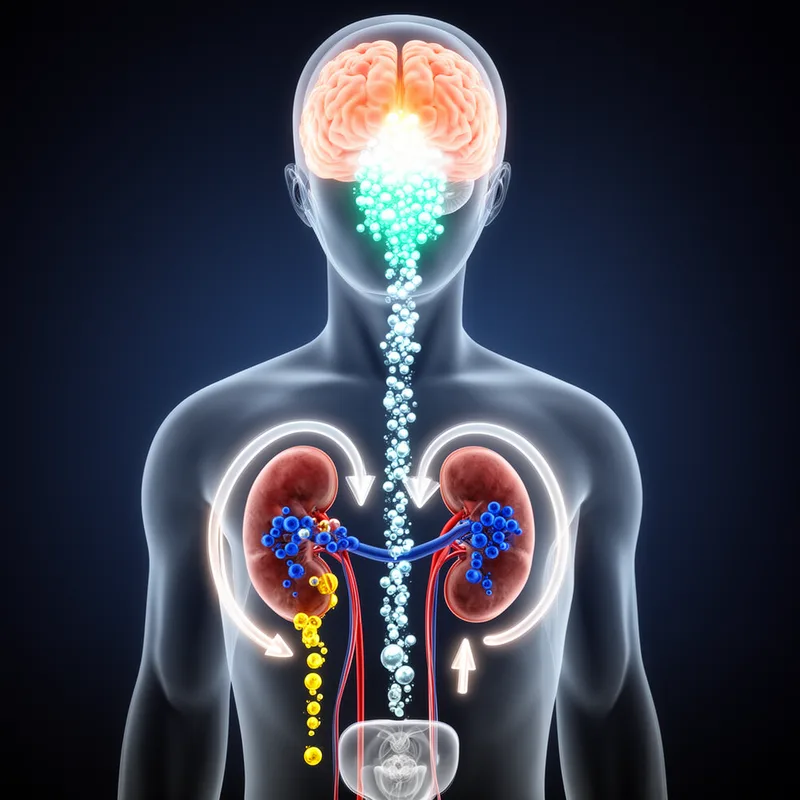
ADH
- noun
- /ˌeɪ diː eɪtʃ/
- Specialized
 :
ADH
:
ADH
- An increase in serum osmolality stimulates osmoreceptors located in the supraoptic nucleus of the hypothalamus to release ADH.
- ADH levels
- antidiuretic hormone (ADH)
- ADH hormone
Examples
-
The body responds by releasing ADH to hold onto fluids.
-
There are a number of factors that stimulate the secretion of ADH.
Academic text (1998) -
The body responds by releasing ADH to hold onto fluids.
Academic text (2005) -
Urine production is reduced by about 50% at night in response to the circadian rhythm of the antidiuretic hormone (ADH).
Academic text (2012) -
Conversely, hypoosmolality results in less stimulation of osmoreceptors, less secretion of ADH, and less absorption of free water by the kidney as extracellular fluid is concentrated back toward normal.
Academic text (1998) -
When dehydrated, the body releases ADH to conserve more fluid.
-
An increase in ADH levels leads to decreased urine output.
Synonyms
 1
9.3
1
9.3

A hormone that raises blood pressure and makes the kidneys save water

A hormone made in the brain that tells the kidneys to keep water and helps control blood pressure
Surface Forms
Etymology
The word ADH is short for anti-, diuretic, and hormone; anti- means 'against' and diuretic means 'to make you pass urine', so ADH is a hormone that works 'against' making urine. That's why ADH helps the body keep water and reduce how much you urinate.