
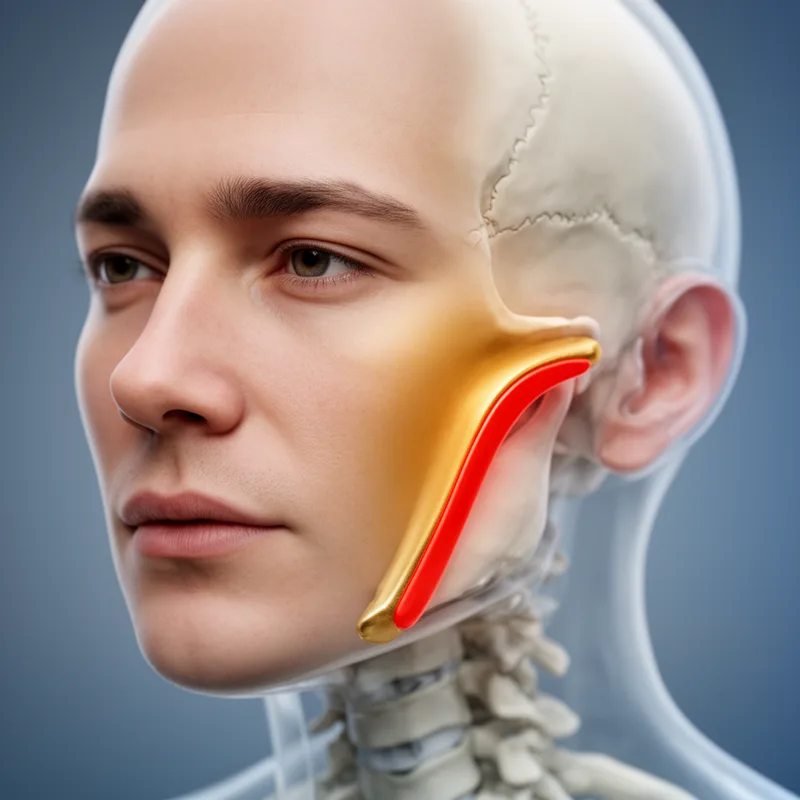
zygoma
 1
9.9
1
9.9

- noun
- /zaɪˈɡoʊmə/
- Specialized
 :
zigoma
:
zigoma
- Most osseous lesions have been reported in the mandible; other sites include the maxilla, the zygoma, all the paranasal sinuses, and the orbital and petromastoid regions.
- maxilla and zygoma
Examples
-
The patient was taken by the neurosurgery service to the operating room, where he underwent a left temporal craniotomy with mobilization of the left zygoma and removal of the nail.
Academic text (2002) -
The most common facial fractures were in the mandible (61%) followed by the maxilla (46%), the zygoma (27%), and the nasal bone (19.5%).
Academic text (2007) -
All to point out that the zygoma formed part of the orbital rim, and that the roof of the orbit was a mere eggshell of bone that separated the eyeball from the brain.
Fiction book (1993) -
During this period, personal assaults increased by 75%, and fractures of the zygoma became more common than fractures of the mandible, facts which may well be related.
Academic text (2007) -
Physical examination revealed that an expansile, pink, glistening mass had nearly occluded the external auditory canal and that a firm preauricular mass had extended from the angle of the jaw to the zygoma.
Academic text (2003) -
The doctor examined the patient's zygoma to assess the extent of the injury.
-
A fracture of the zygoma can lead to changes in facial appearance.
-
During the surgery, the surgeon repaired the damaged zygoma to restore the patient's cheek structure.
Synonyms
 1
9.0
1
9.0
A curved bone on the side of the skull where the cheek meets the head

A curved bony arch on the side of the face where the cheekbone joins the bone near the ear
Surface Forms
Etymology
The word zygoma comes from the Greek zygon, meaning 'yoke' or 'bridge'. So the zygoma is the bony arch that joins the cheekbone and the temple like a small bridge, which helps you remember its curved shape on the face.