

zwieback
 1
9.9
1
9.9

- noun
- /ˈzwiːbæk/
- Or perhaps my memory is confused: perhaps that day we ate jam on zwieback crusts and drank juniper tea, while an old Jew played a zither....
Examples
-
She urged him to have zwieback and tea with her as a light snack.
-
One morning, Lily went into the kitchen where Bea was in her high chair, gumming zwieback with delight.
-
Do join us, Detective Zwieback.
-
She urged him to have zwieback and tea with her, but he seemed to be in a hurry.
Fiction book (1993) -
The only sliced bread the baker had was the equivalent of zwieback, unless you wanted salted pizza dough.
Fiction book (2002) -
There were toys on the floor, clean diapers that I was folding on the couch, half-finished baby bottles of water and juice on the tables, as well as teething rings and bits of wet zwieback.
Fiction book (1996) -
Many European cheesecake recipes use zwieback as a substitute for graham crackers.
Synonyms
 5
5.9
5
5.9
A hard dry slice of sweet bread baked twice until crisp
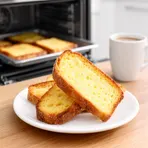
A slice of sweet bread that is baked twice until it turns hard and crisp

A thin slice of sweet bread baked twice until it is hard and crisp
Surface Forms
Etymology
Zwieback comes from German parts zwei 'two' and backen 'to bake', and it is related to the English word bake. So zwieback is bread baked twice, which makes it brown, hard and crisp and explains why it is a longlasting snack or good for babies to chew.