
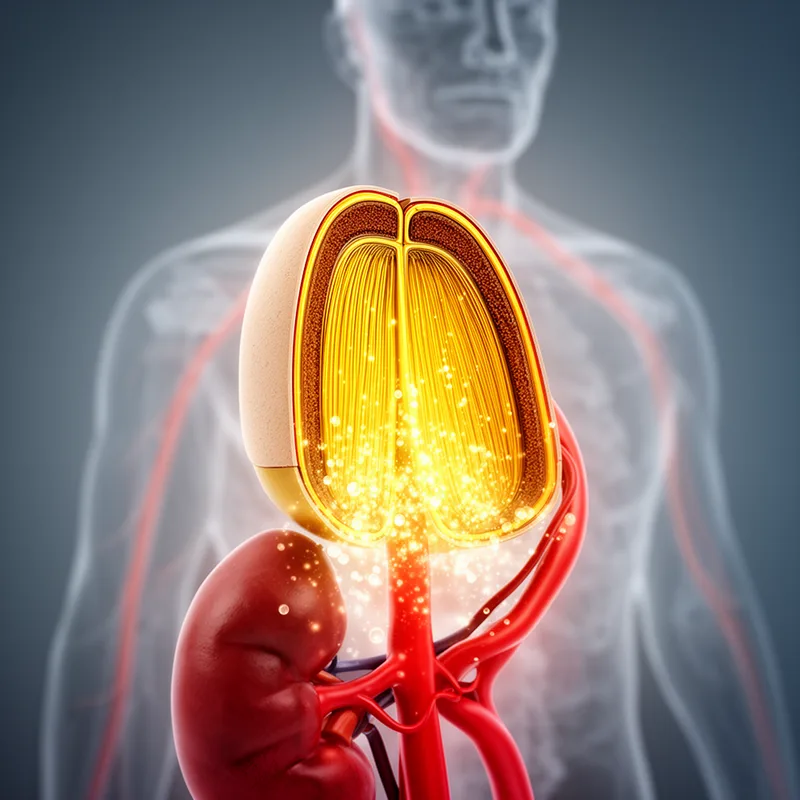
zona fasciculata
- noun
- /ˈzoʊnə fæˈsɪkjʊˌleɪtə/
- Specialized
- The zona fasciculata is the layer of the adrenal cortex that produces vital hormones like cortisol.
Examples
-
Damage to the zona fasciculata can affect hormone levels and stress response.
-
Cortisol is produced in the zona fasciculata layer.
-
The zona fasciculata is responsible for producing cortisol in the body.
-
Doctors studied the zona fasciculata to understand its role in adrenal disorders.
-
The zona fasciculata is crucial for hormone production.
-
Research shows that the zona fasciculata plays a significant role in regulating stress hormones.
-
Abnormalities in the zona fasciculata can lead to serious hormonal imbalances in the body.
Surface Forms
Morphology
zona + fasciculata
While 'zona' clearly signals a zone or layer, 'fasciculata' is a Latinized, technical adjective (bundle-like) and the compound does not transparently convey the specific anatomical sense 'middle layer of the adrenal cortex that produces cortisol'. The term is domain-specific and, although learners who know the constituents might infer it names a type of layer, they would not reliably infer its position or hormonal function without specialist knowledge.
Etymology
The term zona fasciculata comes from Latin: zona meaning 'zone' and fasciculata meaning 'small bundles'. It was named because this 'middle layer' of the adrenal gland looks like bundles of cells and is where the hormone 'cortisol' is made, so the name points to both its place and its job.

