
zoanthropy
- noun
- /zoʊˈænθrəpi/
- Specialized
- The patient was diagnosed with zoanthropy after claiming she had become a cat.
Examples
-
He suffers from zoanthropy and believes he is a wolf.
-
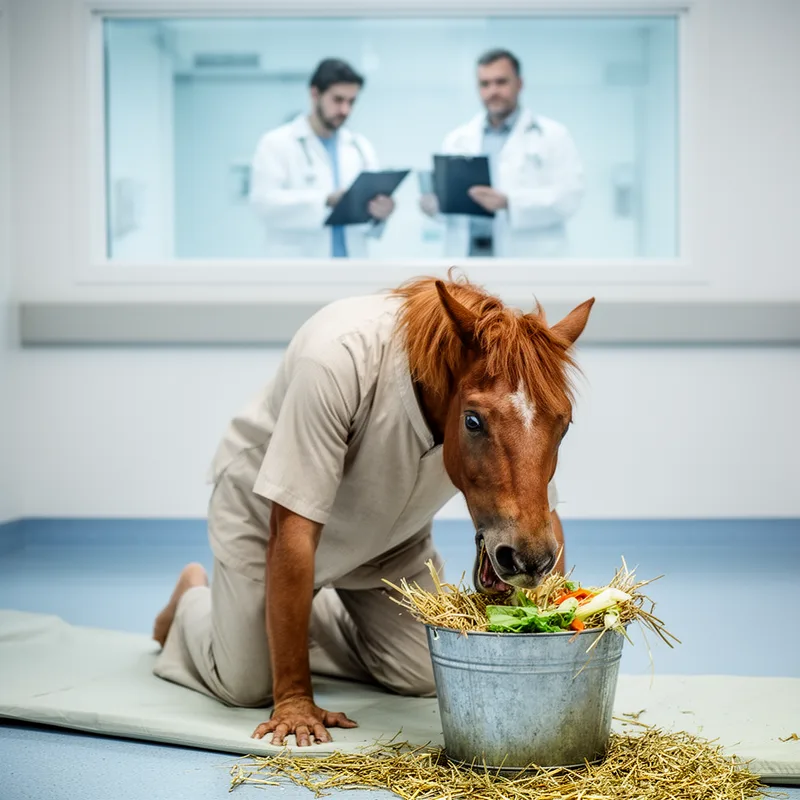
He exhibited signs of zoanthropy, insisting he should eat and behave like a horse.
-
Cases of zoanthropy are extremely rare, but have been documented throughout history.
-
Some cases of zoanthropy are documented in psychological studies.
-
He exhibited signs of zoanthropy, insisting he should eat and behave like a horse.
-
The patient was diagnosed with zoanthropy after claiming she had become a cat.
-
Cases of zoanthropy are extremely rare, but have been documented throughout history.
Surface Forms
Morphology
zoanthropy = zo + anthrop + y
The components are classical combining forms ('zo-' = animal, 'anthrop-' = human) plus the nominalising suffix '-y', but these combining forms are not productive or familiar to average learners, so the meaning cannot be reliably derived from the parts.
Etymology
Zoanthropy comes from Greek parts zo- meaning 'animal' and anthropos meaning 'human', and you can remember zo- from zoo or zoology. So, zoanthropy describes a rare condition in which a person believes they have turned into an animal.

