
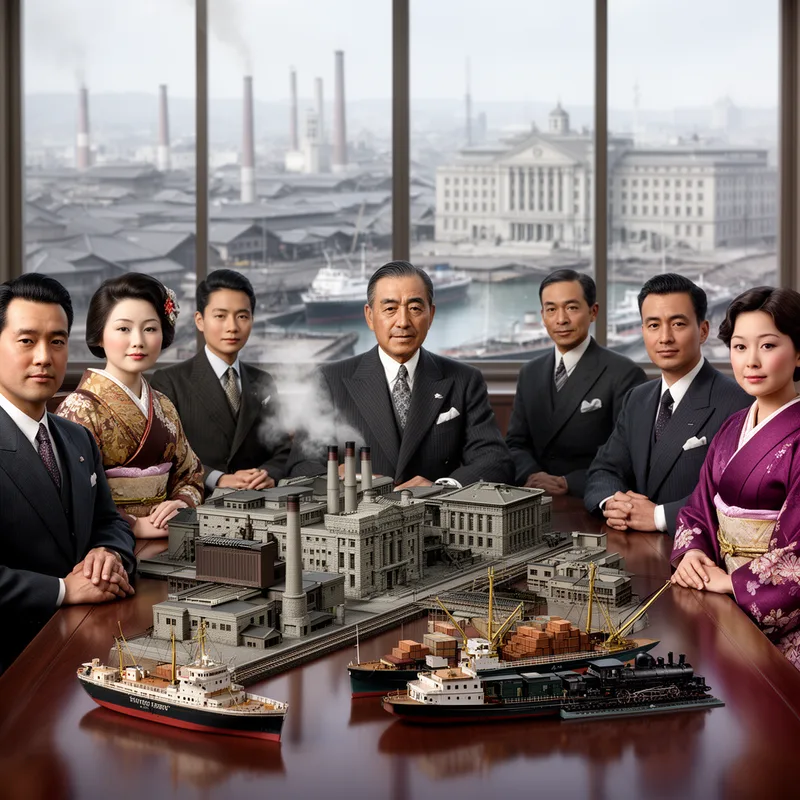
zaibatsu
 1
9.9

- noun
- /zaɪˈbɑːtsu/
- Archaic
- Mr. Takashi Kusaka, Kio Ono's lifelong friend, is the head of this zaibatsu.
- Japanese zaibatsu
Examples
-
Relatively late in the war, in November 1943, a Ministry of Munitions was created, and the zaibatsu industrialists were given greater power to cope with the military and other state ministries.
Academic text (1990) -
Zaibatsu were criticized in the press for their influence over national affairs, and further bad publicity was unwelcome.
Fiction book (1999) -
So we're meeting a Zaibatsu, a leader in the banking world.
-
Chairman of the Domyouji Zaibatsu?
-
With the Great War's approach, the zaibatsu shifted resources to naval endeavors.
Fiction book (1999) -
These men came to Meboso in showy cars to discuss policy and coordinate their efforts in the zaibatsu's interest.
Fiction book (1999) -
The zaibatsu placed Shuko Kan family members in all corridors of Japanese power—economic, government, military.
Fiction book (1999) -
Perhaps because large-scale commercial enterprises, such as the Mitsui zaibatsu (which dates from the middle seventeenth century), preceded industrialization, Japanese culture has seldom looked with much fear on big companies.
Academic text (1991) -
The powerful zaibatsu dominated the Japanese economy before World War II.
-
During the 1920s, many zaibatsu expanded their influence beyond Japan's borders.
Surface Forms
Etymology
Zaibatsu comes from Japanese parts zai and batsu, where zai means 'wealth' or 'money' and batsu means 'clique' or 'group'. So a zaibatsu was originally a powerful family 'group' that controlled many businesses, which is why the word names the large group of companies that were strong in Japan before World War II.