
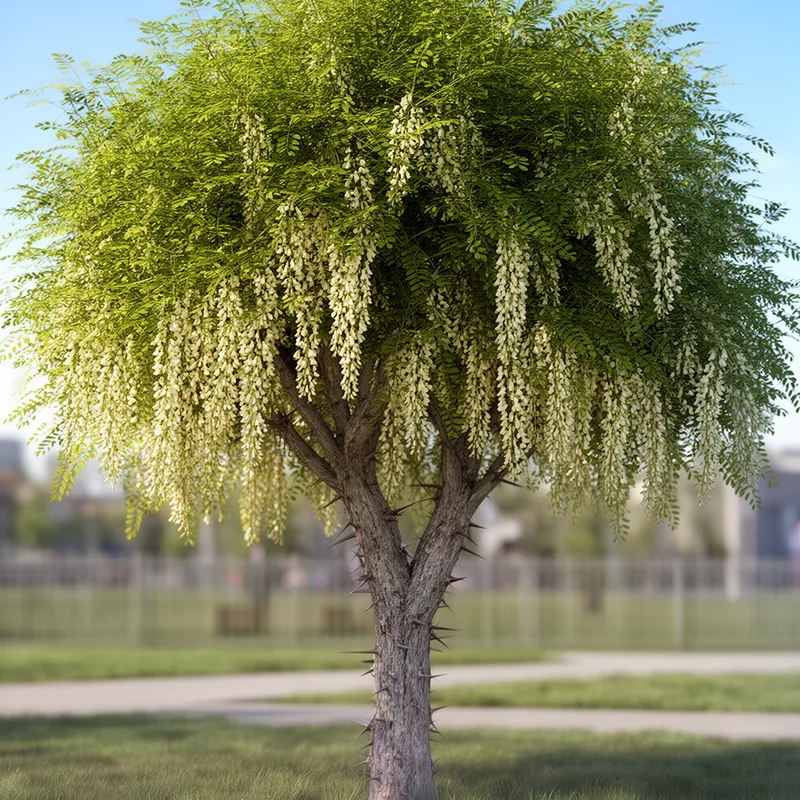
yellow locust
- noun
- /ˈjɛloʊ ˈloʊkəst/
- US
- In the spring, the yellow locust bursts into clusters of white flowers, attracting bees and butterflies.
Examples
-
Many city parks have planted yellow locust trees because of their resilience in urban environments.
-
The yellow locust is valued for its hard, durable wood and rapid growth.
-
A beautiful yellow locust stood in the corner of their backyard, blooming every spring.
-
The yellow locust tree grows tall and strong.
-
Many yellow locusts can be found in the eastern United States.
-
The landscape architect recommended planting yellow locust trees for their shade and beautiful blooms.
-
Due to its strong wood, the yellow locust is often used in outdoor furniture and decking.
Surface Forms
Morphology
The noun phrase denotes a locust tree characterized by a yellow feature, so a B1 learner who knows 'yellow' and 'locust' (in the tree sense) can directly infer it refers to a type of locust tree. Color + noun compositional patterns are standard and cross-linguistically common, making the meaning predictable from the constituents.
Etymology
Yellow locust comes from a simple picture: one story says people called some trees locust because their long, hanging seed pods looked a bit like insects, and they added yellow for the warm color of the wood or flowers. So, yellow locust now names that large, tough tree with thorny branches and hanging pods.

