
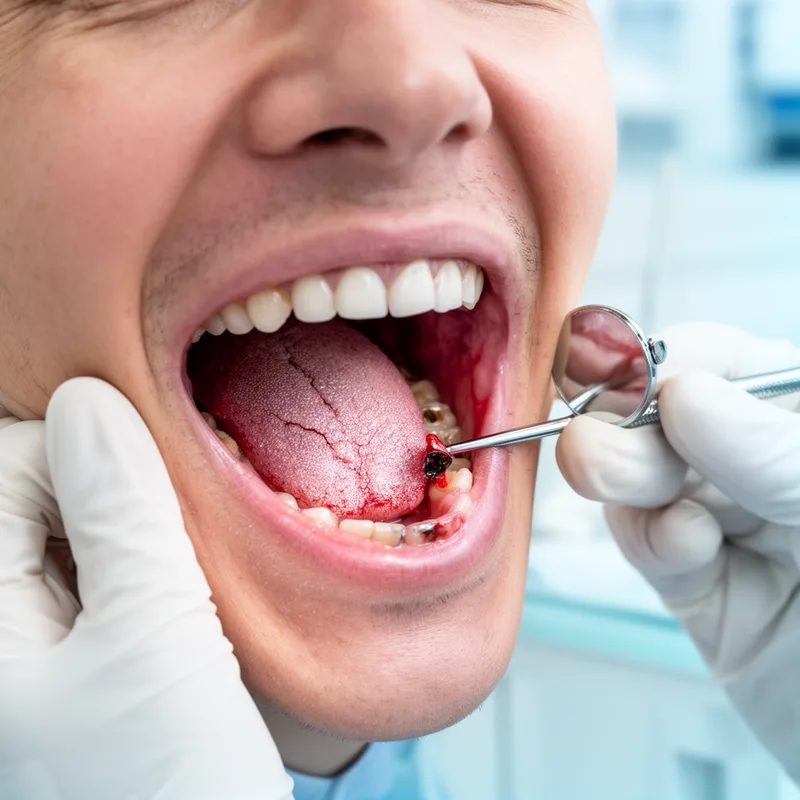
xerostomia


 1
9.9
1
9.9
- noun
- /ˌzɪəroʊˈstoʊmiə/
- Specialized
- The case studies presented here illustrate three of the different causes of xerostomia: drug therapy, systemic disease, and radiation therapy.
- causes of xerostomia
- xerostomia is associated
Examples
-
Patients may complain of xerostomia, xerosis, or a foreign body sensation in the eye.
Academic text (1996) -
One of the most prevalent causes of xerostomia is medication.
Academic text (1999) -
The treatment of xerostomia is a challenge.
Academic text (1999) -
Of the 22 symptoms included in that survey, xerostomia was the most common.
Academic text (1999) -
Their study showed that xerostomia increases the risk of coronal and root disease.
Academic text (1999) -
Recently, pilocarpine has been used in the treatment of post-radiotherapy xerostomia.
Academic text (1999) -
Systemic illness and stress also contribute significantly to the prevalence of xerostomia among the elderly.
Academic text (1999) -
Xerostomia is a subjective complaint, so it might not correlate with actual physical findings of oral dryness.
Academic text (1999) -
Xerostomia can lead to dysgeusia, glossodynia, sialadenitis, cracking and fissuring of the oral mucosa, and halitosis.
Academic text (1999) -
Xerostomia can cause difficulty in eating and speaking due to the lack of saliva.
Synonyms
 7
3.2
7
3.2
A dry feeling in the mouth when you do not make enough saliva
Antonyms

How Dry
- Specialized
1
9.9

- Specialized
1
4.1
Surface Forms
Morphology
xerostomia = xero + stomia
The term is derived from Greek roots 'xero-' meaning 'dry' and '-stomia' meaning 'mouth', but these are not productive English morphemes.
Etymology
The word xerostomia comes from Greek parts xero- 'dry' and -stomia 'mouth'. So xerostomia simply means 'dry mouth', which explains the modern medical meaning of not having enough saliva.