
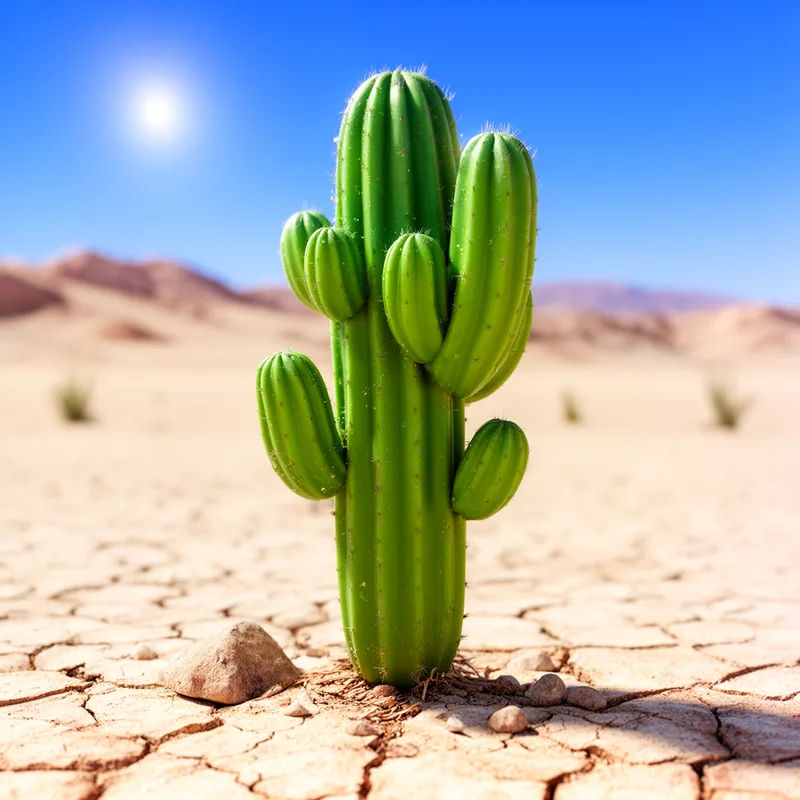
xerophytic plant
- noun
- /ˌzɪəroʊˈfɪtɪk plænt/
- Specialized
- Many xerophytic plants have thick leaves or waxy coatings to reduce water loss.
Examples
-
The cactus is a classic example of a xerophytic plant found in deserts.
-
Botanists study how a xerophytic plant stores water to survive long droughts.
-
The xerophytic plant thrives in desert conditions.
-
Many xerophytic plants can survive with very little water.
-
The cactus is a classic example of a xerophytic plant that thrives in arid environments.
-
Many xerophytic plants have evolved to store water in their stems to survive dry periods.
-
In the desert, you'll find xerophytic plants with adaptations like thick skins to minimize moisture loss.
Synonyms

 1
3.6
1
3.6

A plant that can live with very little water, for example a cactus

A plant that lives in very dry places, like a cactus, and stores water

A plant like a cactus that lives in very dry places and uses little water
A plant or living thing that lives where there is very little water
How Drought-Tolerant

Surface Forms
Morphology
The meaning 'a plant adapted to survive with limited water' is directly and transparently derived from combining 'xerophytic' (thrives in dry habitats) with 'plant' (a photosynthetic organism). This is a straightforward adjective + noun composition following normal English patterns, so a learner who knows both constituents will readily infer the MWE meaning.
Etymology
Xerophytic plant comes from two Greek words: xero- meaning 'dry' and -phyte meaning 'plant'. It gives the image of a plant that lives in dry places and saves water, so it means a plant that can 'survive with very little water'.