
xenon
 5
8.4

- noun
- /ˈzɛnɒn/
- Specialized
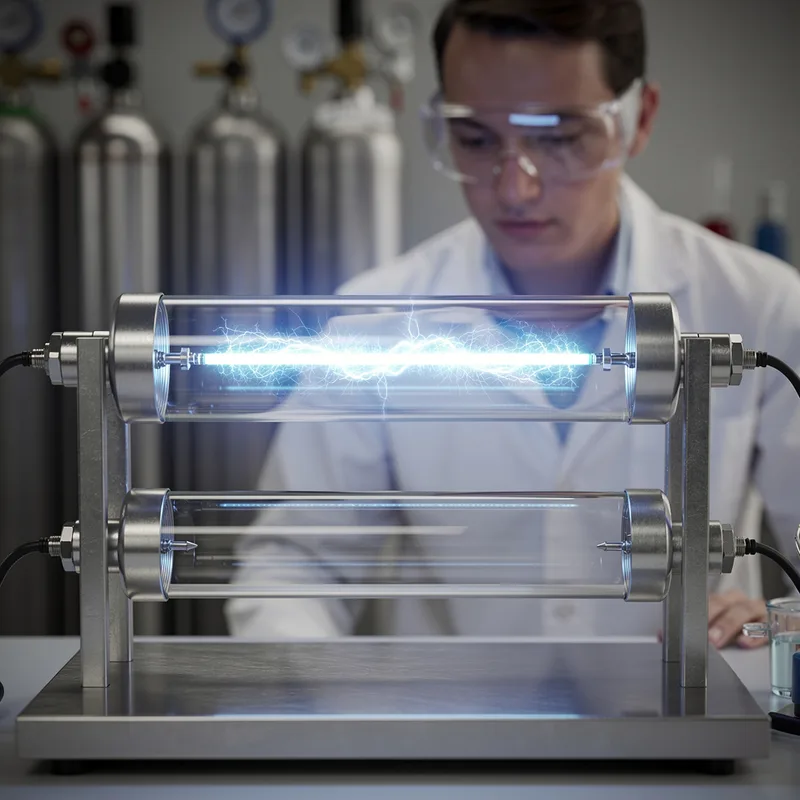
- This is a xenon lamp apparatus.
- xenon isotopes
- xenon poisoning
- radioactive xenon
Loading YouTube…
Watch on YouTubeAnd this is usually a neutral gas like xenon or argon.
- And this is usually a neutral gas like xenon or argon.
- Because the energy denominator for the first excited state is much lower for xenon than for helium.
Examples
-
When we brightened the flash with a Xenon bulb, it helped a little but didn't solve the problem.
Blog text (17) -
And so when we have too much xenon present but it's not at high enough temperatures, we essentially start poisoning the reactor.
-
We're required to rest for six hours on level 4 after exposure to the xenon lamp.
-
The additional tubes were enough to overcome the xenon poisoning.
Academic text (2002) -
Nitrogen gas is directed through the charcoal bed to remove the xenon and carry it to ARSA's radiation detection system.
Academic text (2000) -
Electric band heaters raise the temperature of the charcoal to desorb the xenon.
Academic text (2000) -
The sole illumination came from a pair of xenon lamps set in the nose of his one-man submersible.
Fiction book (2001) -
A thick, eyeless eel slithered past, teeth bright in the xenon lamp.
Fiction book (2001) -
A second contribution comes from the volatile fission products, such as isotopes of xenon, krypton, and iodine.
Academic text (1999) -
The room was filled with light from the xenon lamps, creating a bright and vibrant atmosphere.
Synonyms

 1
6.8
A chemical symbol for the colorless, odorless, inactive gas xenon
Surface Forms
Morphology
xenon = xeno + on
The form is built from the Greek combining form 'xeno-' plus the element-forming suffix '-on'; this specialised chemical name is not transparently interpretable by average learners from its parts.
Etymology
Xenon comes from the Greek xenos, meaning 'stranger' or 'foreign', because scientists first found it as a rare, unexpected gas. The ending -on is the same as in neon, so think of xenon as a 'strange' gas like other rare gases, which helps explain why it is a rare, colorless gas found in tiny amounts in the air.