
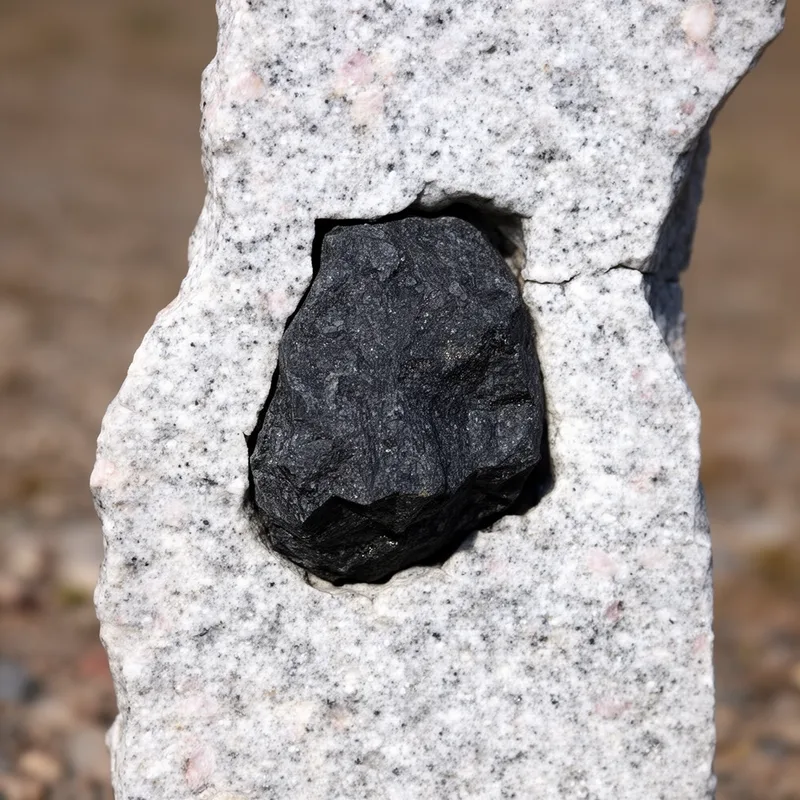
xenolith


 1
9.9
- noun
- /ˈzɛnəˌlɪθ/
- Specialized
- As metasomatism by alkali-rich carbonate melts is often reported to affect mantle xenoliths and predicted from experimental studies, the fluid type documented here likely represents a
- mantle xenoliths
Examples
-
Table 7: Water contents from Pingnan peridotite xenoliths Sample
Academic text (2018) -
Table 3: Major-element concentrations in orthopyroxenes from Pingnan peridotite xenoliths
Academic text (2018) -
Table 1: Rock types and mineral modes from Pingnan peridotite xenoliths.
Academic text (2018) -
Table 5: Major-element concentrations in spinels from Pingnan peridotite xenoliths
Academic text (2018) -
The general preservation of zoning demonstrates that recrystallisation cannot have been pervasive. Phenocrysts, antecrysts, xenoliths, and xenocrysts.
Academic text (2018) -
Geologists study the properties of xenoliths to better understand the Earth's mantle.
-
During the volcanic eruption, many small xenoliths were ejected from deep within the Earth.
-
The xenoliths found in the lava flow provided valuable insights into the geological history of the area.
Surface Forms
Morphology
xenolith = xeno + lith
The word is semantically built from classical forms meaning roughly 'foreign' and 'stone/rock', but these forms are not everyday English base words, so an average learner is unlikely to infer the geological sense.
Etymology
Xenolith comes from the Greek parts xeno- meaning 'foreign' and lithos meaning 'stone', so it literally means 'foreign stone'. A helpful image is a piece of rock that is like a visitor trapped inside another rock, which is why geologists call fragments that do not belong to the rock around them xenoliths.