
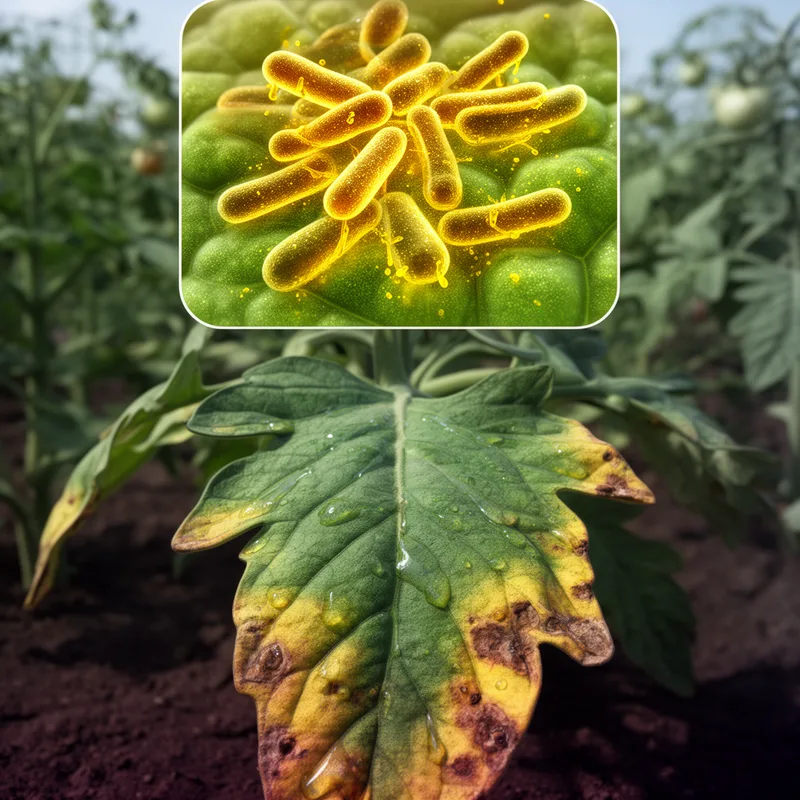
xanthomonad
- noun
- /ˌzænθəˈmoʊnæd/
- Specialized
- Scientists discovered a new xanthomonad species on the leaves of the infected pepper plants.
Examples
-
Proper sanitation is essential to control the spread of xanthomonads in agricultural fields.
-
Xanthomonad bacteria are known for producing yellow pigments that can harm various plants.
-
Xanthomonad infections can cause significant losses in tomato crops each year.
-
The xanthomonad bacteria can cause significant damage to crops.
-
Farmers often struggle with xanthomonads affecting their plants.
-
Researchers are studying the xanthomonad strains that threaten fruit production in orchards.
-
Effective treatment involves removing infected plants and preventing xanthomonad outbreaks in crops.
Synonyms


 1
9.9
A group of bacteria that makes a yellow pigment and causes disease in plants
Surface Forms
Morphology
Etymology
Xanthomonad comes from Greek parts: xantho- meaning 'yellow' and -monad meaning 'single' or 'one-celled', like the 'mono-' in monologue. So a xanthomonad is a 'yellow' single-celled bacterium, which is why some types make yellow pigment and can harm plants.