
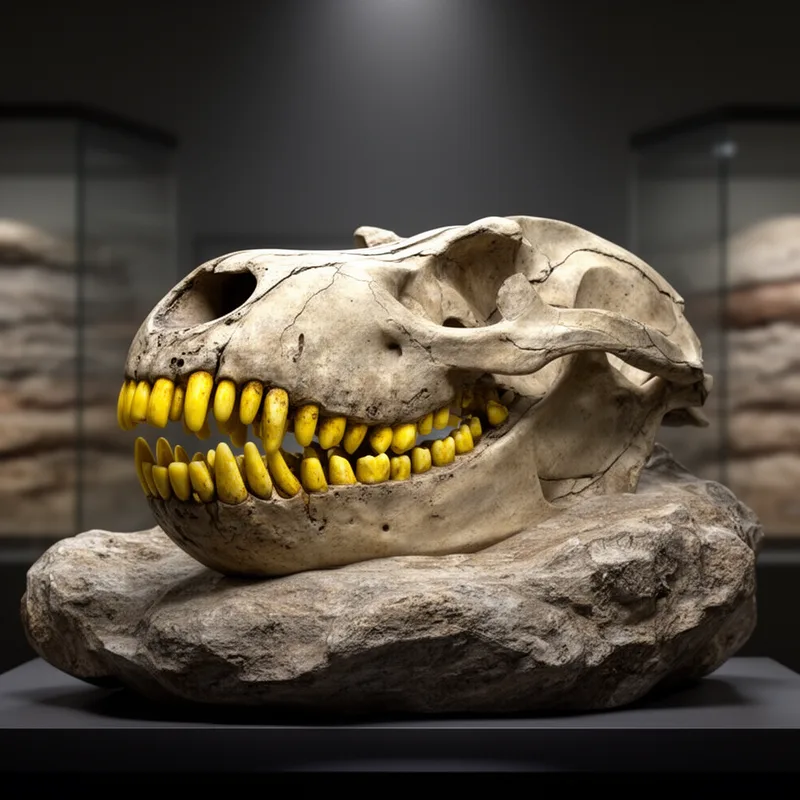
xanthodont fossil
- noun
- /ˈzænθəˌdɒnt ˈfɒsəl/
- Specialized
- The paleontologist discovered a rare xanthodont fossil in the sedimentary rock layer.
Examples
-
Researchers believe the xanthodont fossil provides clues to the diet of ancient animals.
-
The museum's new exhibit features several impressive xanthodont fossils.
-
The xanthodont fossil was discovered in a remote cave.
-
Many xanthodont fossils have been found in North America.
-
The paleontologist discovered a rare xanthodont fossil in the sedimentary rock layer.
-
The museum's new exhibit features several impressive xanthodont fossils.
-
Researchers believe the xanthodont fossil provides clues to the diet of ancient animals.
Synonyms
 316
3.6
316
3.6

The preserved remains of a very old plant or animal in rock
Surface Forms
Morphology
xanthodont + fossil
The phrase is a straightforward modifier + noun composition: 'xanthodont' (yellow-toothed) modifies 'fossil' (remains), so the meaning 'fossil of a yellow-toothed species' is directly derivable from the parts. Note that 'xanthodont' itself is rare and built from Greek roots and thus likely unknown to B1 learners, but given knowledge of the constituents the compound is compositional and transparent.
Etymology
Xanthodont fossil comes from Greek parts: xantho- meaning 'yellow' and -odont meaning 'tooth'. It literally names a fossil with yellowish teeth, and scientists who study fossils use the term for remains that help them learn what the animal ate.