
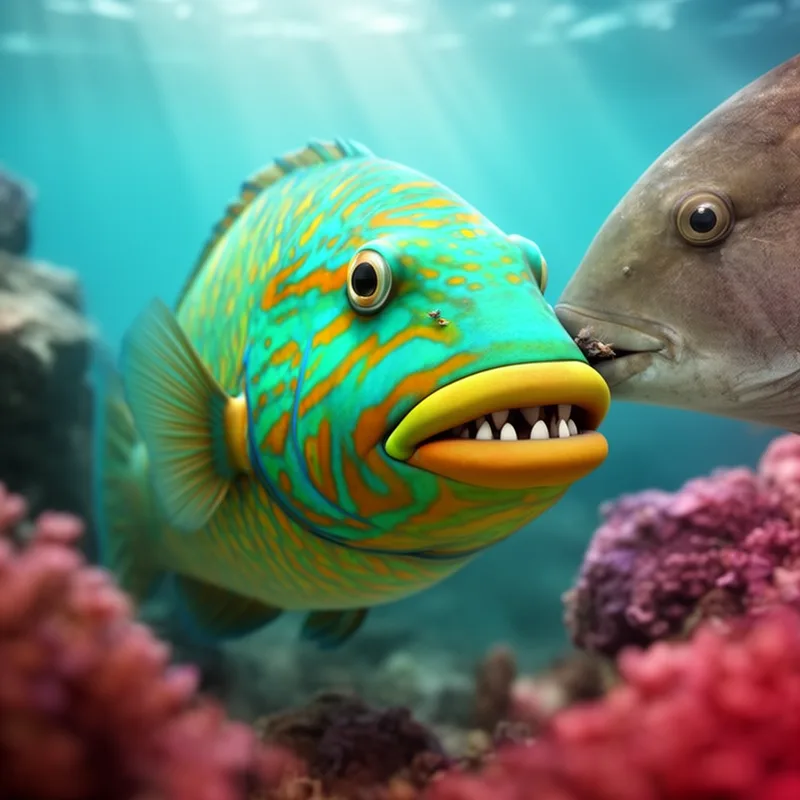
wrasse
 2
9.4

- noun
- /ræs/
- Many divers are excited to see the colorful wrasse roaming around the coral reefs.
- Napoleon wrasse
Examples
-
The wrasses also consumed the algae growing on the mesh nets, helping keep the pens clean.
Academic text (1990) -
As a result, Norwegian scientists are now trying wrasses—called "cleaner fish"—as a natural source for removing sea lice from salmon.
Academic text (1990) -
Would the larger fish eat the cleaner wrasse if food becomes scarce?
Blog text (20) -
For instance, a cleaner wrasse and larger fish have a symbiotic relationship.
Blog text (20) -
Ban or restrict the export of especially vulnerable species, such as the Napoleon wrasse.
Academic text (1998) -
The larger fish get themselves cleaned by the cleaner wrasse, with all the health benefits that produces, and the cleaner wrasse get a great meal.
Blog text (20) -
Viewers can watch Michele Hall allowing a cleaner wrasse to clean her teeth.
Academic text (2003) -
An alternative biological control to reduce sea lice is the wrasse, a small fish that eats lice off of salmon.
Academic text (1999) -
The cleaner wrasse helps remove parasites from larger fish in the ocean.
-
In aquariums, the wrasse is known for its vibrant colors and active behavior.
Surface Forms
Etymology
Wrasse probably comes from an old Cornish word meaning 'old woman' or 'hag', a name fishermen may have used because the fish's face and thick lips looked like an old woman's. So wrasse is now the name for those bright, strong‑toothed reef fish.