
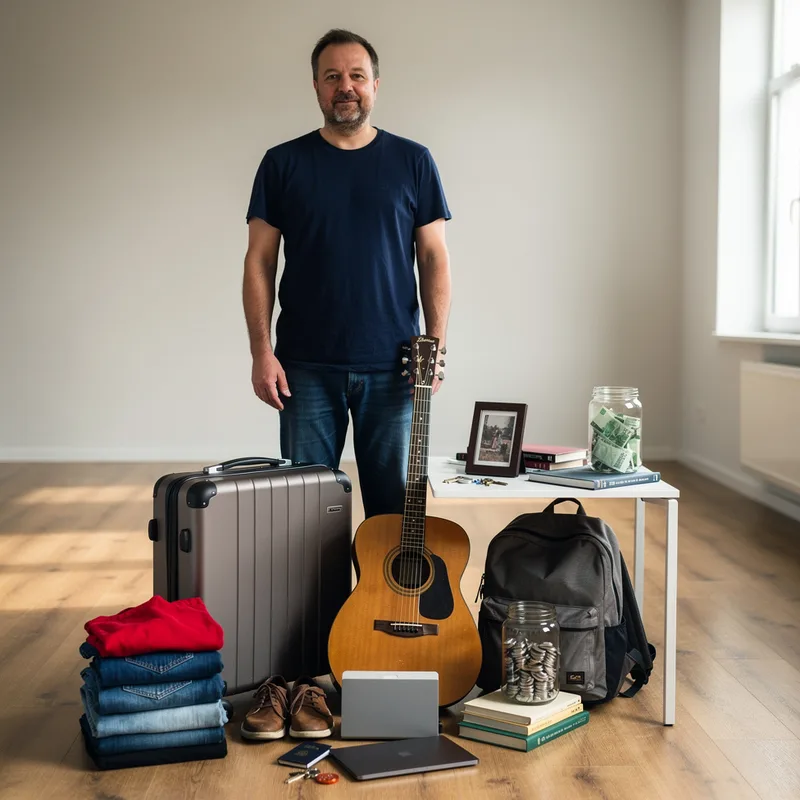
worldly possession
 2
3.2
2
3.2

- noun
- /ˈwɜrldli pəˈzɛʃən/
- The charity helped families who lost their homes and all their worldly possessions in the fire.
Examples
-
And I believe that Mitt Romney may know more about living with less since it is a tenet of the Mormon Church to do two years of "missionary" work, which means you leave all your worldly possessions as Jesus had suggested and live off the goodness of those you lived with.
Blog text (6) -
In it was his every worldly possession, except for a guitar that he had once tried to learn to play, which was back in Utah.
Fiction book (1990) -
Alobar's worldly possessions—a tea bowl, a change of clothing, and a knife that in twenty years had been used only for shaving—were packed in a flash.
Fiction book (1990) -
After being homeless on the streets of Albany, NY, for six months, living out of a backpack, you would think that the last thing I would ever want to do is live small or carry my worldly possessions in a pack, often existing on less than ten dollars a day—total.
Blog text (6) -
He decided to sell all his worldly possessions before moving to the monastery.
-
Many people believe that true happiness comes from experiences, not from worldly possessions.
Synonyms
 240
1.7
240
1.7
A thing that belongs to someone
 7
3.0
7
3.0
A thing you can touch that belongs to someone

A thing someone owns that is not spiritual, like money or furniture

A thing you own that you can touch
Antonyms

How Material

Surface Forms
Morphology
The meaning 'a material object owned by a person' is directly and transparently derived from combining 'worldly' (material, non-spiritual) with 'possession' (an owned item). This adjective+noun composition follows ordinary semantic rules and is cross-linguistically common, so a B1 learner who knows both words would readily understand the phrase.
Etymology
Worldly possession comes from old religious ideas that said the 'world' is everyday life and things, and that this is different from the 'spiritual' life. A possession is something you own, so worldly possession means a material thing someone owns in this life, not a spiritual gift, which is why today it means 'a material object or property owned by a person'.