

to work in
 268
3.5
268
3.5

- phrasal verb
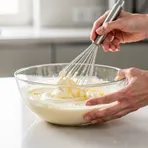
- It's important to work in all the ingredients slowly to create a smooth batter.
Examples
-
The chef will work in fresh herbs to enhance the dish's flavor.
-
She decided to work in a few additional examples to clarify her presentation.
-
What department do you work in?
-
One stated, "I feel like I worked in a different place than the rest of you."
Academic text (2008) -
We work in the same corporation.
-
I wish Father could afford to pay someone to work in the shop instead of me.
Fiction book (1993) -
Pockets where students can work in small or large groups were part of the design.
Academic text (2011) -
Having been demobilized from the army, I now began working in my new profession.
Fiction book (1994) -
In Turkey, women mostly work in the public sector as civil servants or assistants.
Academic text (2008) -
One woman who briefly worked in retail sales described the fun she had with her coworkers.
Academic text (2008)
Synonyms
 416
1.0
416
1.0
To combine two or more things so they become one
 255
2.3
255
2.3
To mix things so they become one or look good together
 152
1.0
152
1.0
To mix a liquid by moving it with a spoon
 39
1.8
39
1.8
To add something to food and stir so it becomes part of the food
 18
5.3
18
5.3
To mix things so they become one
 3
3.3
3
3.3
Mix one ingredient into others until the mixture is smooth


 1
8.8
1
8.8
To mix one substance with another so they become combined
Antonyms


How Mixed
- Specialized
12
6.1
 3
3.3
39
1.8
268
3.5
220
1.0
∞
1.0
100
1.1
3
3.3
39
1.8
268
3.5
220
1.0
∞
1.0
100
1.1
Surface Forms
Morphology
The sense 'to add or incorporate into' follows directly from combining 'work' (to manipulate, shape, or prepare) with 'in' (into/inside), yielding the idea of manipulating something into a mixture or situation. This verb+particle composition is a common, mostly literal phrasal pattern and is therefore likely to be inferable by a B1 learner who knows the constituent words.
Etymology
The verb work in comes from the image of stirring something into a bowl: you work an ingredient in by mixing it until it becomes part of the whole. So, work in means 'to add or include something carefully into a mix or situation'.