

woolly sunflower
- noun
- /ˈwʊli ˈsʌnˌfloʊər/
- US
- We spotted several woolly sunflowers growing along the hiking trail last spring.
Examples
-
The woolly sunflower thrives in dry, open areas along the western coast of the United States.
-
Wildlife is often attracted to the bright yellow blooms of the woolly sunflower.
-
The woolly sunflower blooms beautifully in the spring.
-
Many woolly sunflowers grow along the hiking trails in California.
-
The woolly sunflower grows best in sunny, dry environments with poor soil.
-
In the summer, the woolly sunflower attracts bees with its vibrant yellow flowers.
-
During our hike, we noticed that the woolly sunflower covered the hillsides in a beautiful golden hue.
Synonyms
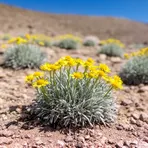
A small grey-leaved plant with bright yellow, daisy-like flowers that grows in dry places in western North America

A small plant that lives for one year with soft grey leaves and small yellow flower heads
Surface Forms
Morphology
The noun phrase is a straightforward composition: 'woolly' (having a soft, hairy texture) modifies 'sunflower' to indicate a type/subspecies of sunflower with woolly leaves or surfaces. This is a literal, descriptive combination following regular adjective + noun patterns and would be understandable to a B1 learner who knows both constituent words.
Etymology
Woolly sunflower gets its name from the plant's soft, wool-like leaves and its bright, sunflower-like yellow flowers. The words woolly and sunflower point to those two visible parts, so the name came to mean a common 'plant' found in western North America with those features.

