
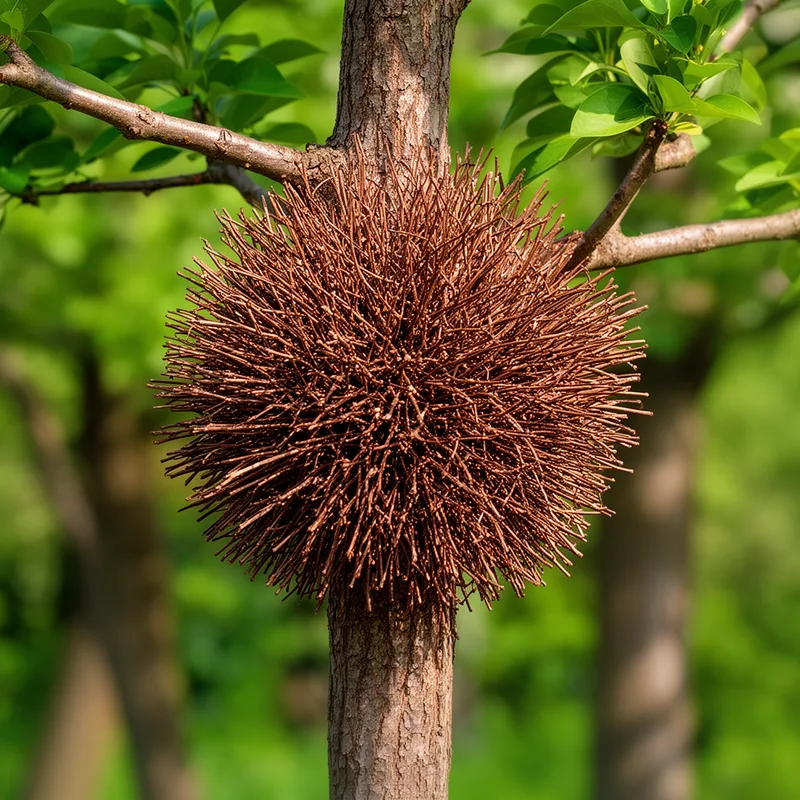
witch broom
- noun
- /wɪtʃ bruːm/
- Specialized
- The old elm in the garden developed a large witch broom after an outbreak of fungus.
Examples
-
Certain insects are known to cause witch broom formations on fruit trees.
-
Gardeners prune away any witch brooms to prevent further damage to the tree.
-
The tree had a strange witch broom growing on its branches.
-
I found several witch brooms in the old oak tree.
-
Gardeners often remove witch broom from trees to maintain their health and appearance.
-
The arborist explained that a witch broom can indicate stress in a shrub caused by pests.
-
After the storm, we noticed a large witch broom on the maple tree in our backyard.
Synonyms

A thick cluster of small branches that grows from one spot on a tree, often after fungus or insect damage
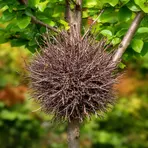
A dense cluster of small branches on a tree caused by disease or insects
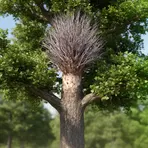
A tuft of small dead branches on a tree caused by disease or insect attack
Surface Forms
Morphology
witch + broom
The sense 'an abnormal dense cluster of twigs or branches' is a specialized botanical term and is not compositionally derivable from the literal constituents 'witch' (supernatural woman) and 'broom' (either a cleaning tool or a shrub). The folkloric/metaphorical association with witches riding brooms and the technical nature of the phenomenon make the meaning unpredictable for a B1 learner who only knows the constituent words, so it is opaque.
Etymology
Witch broom comes from the sight of a tight bunch of twigs or small branches growing from one spot on a tree, because it looks like a little broom a witch might carry. That's why gardeners call that dense, broom-like growth a 'witch broom'.

