

witch-hazel family
- noun
- /ˈwɪtʃˌheɪzl ˈfæmɪli/
- Specialized
- The witch-hazel family includes many beautiful flowering plants.
Examples
-
Liquidambar, commonly called sweetgum, is a genus in the witch-hazel family.
-
Several members of the witch-hazel family produce fragrant flowers in early spring.
-
The witch-hazel family consists of trees and shrubs known for their ornamental value.
-
I planted a witch-hazel family shrub in my garden last spring.
-
The witch-hazel family includes several beautiful plants known for their unique flowers.
-
In the garden, I love to see specimens from the witch-hazel family blooming every spring.
-
Plants from the witch-hazel family, such as Hamamelis, are often used for their medicinal properties.
Synonyms
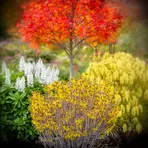
A family of flowering plants that includes witch hazel and other shrubs and trees
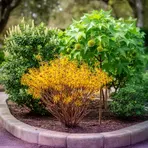
A group of flowering plants that includes witch-hazels and other similar trees and shrubs
Surface Forms
Morphology
witch-hazel + family
The phrase is compositionally built: 'witch-hazel' names a plant and 'family' denotes a group or taxonomic category, so 'witch-hazel family' straightforwardly means the family of plants that includes witch-hazel. This noun + family construction is a common, cross-linguistic pattern, so a B1 learner who knows the constituent words can infer the intended botanical grouping.
Etymology
Witch-hazel family comes from a common shrub called witch-hazel. One popular story says people used the flexible twigs of witch-hazel as a stick to find underground water, so the word witch here linked to 'divining' rather than to real witches. That's why this group of related trees and shrubs is called the 'witch-hazel family'.

