
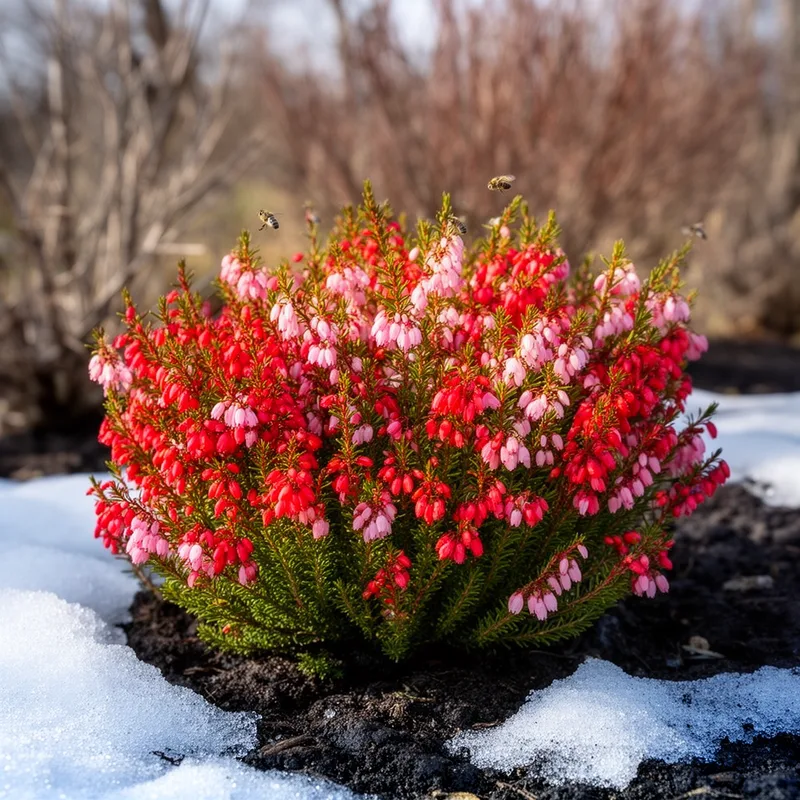
winter heath
- noun
- She chose to plant winter heath because it blooms earlier than most other shrubs.
Examples
-
The winter heath adds a splash of color to gardens even when snow remains on the ground.
-
Tiny bees gathered around the winter heath, drawn by its bright flowers in late winter.
-
The winter heath blooms beautifully in early spring.
-
Many gardeners love planting winter heaths for their vibrant colors.
-
She chose to plant winter heath because it blooms earlier than most other shrubs.
-
The winter heath adds a splash of color to gardens even when snow remains on the ground.
-
Tiny bees gathered around the winter heath, drawn by its bright flowers in late winter.
Synonyms

A low shrub that blooms early in spring with small bell-shaped red flowers

A small European shrub with early bell-shaped pink or red flowers often grown in gardens
Surface Forms
Morphology
The noun-noun composition 'winter' (the cold season) + 'heath' (a small evergreen shrub) directly indicates a heath associated with the winter/early-spring season; the meaning is composed from the constituent meanings with no idiomatic shift. This kind of seasonal modifier is a common, cross-linguistic pattern, so a B1 learner who knows both words would readily infer the MWE's meaning.
Etymology
Winter heath is a simple name that shows the plant's picture: a low shrub that grows on open 'heath' ground and often flowers in winter. So the name tells you this plant 'blooms in late winter or early spring' and brings color when most other plants are still bare.

