
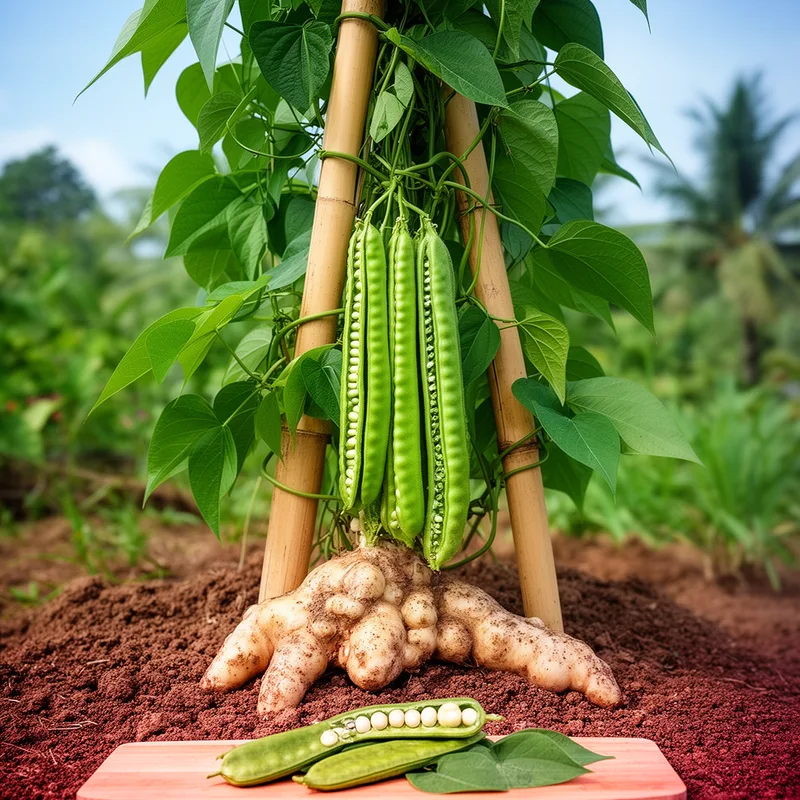
winged bean
- noun
- Indian
- Bush bean and winged bean residues incorporated into the soil supplied N to the rice crop and produced benefits comparable to that of 4 to 8 g fertilizer N m-2.
- winged bean or rice
- winged bean, bush
- winged bean grown
Examples
-
Nitrogen agronomic efficiency of rice after winged bean systems indicated a positive response to rice production without deteriorating soil fertility.
Academic text (2014) -
Between two tested legume crops, winged bean supplied appreciably greater N over their residues at each season.
Academic text (2014) -
Bush beans, winged beans, and corn were planted in early March of 2010 and 2011.
Academic text (2014) -
"The winged bean collection has been important in our preliminary studies, which we hope will allow us to design edible vaccines in the future."
Academic text (1996) -
Take, for example, the winged bean, Psophocarpus tetragonolobus, a plant with high levels of proteins called lectins, which medical researchers use as diagnostic tools because they bind to certain blood cells and specialized transport cells.
Academic text (1996) -
The two-year research findings suggest that both winged bean and bush bean are potential tropical vegetable legumes that can supplement N fertilizer for the following rice crop.
Academic text (2014) -
The winged bean is often used in salads for its unique flavor and nutritional benefits.
-
Farmers in tropical regions cultivate winged beans for their edible pods and nutritious roots.
-
In cooking, winged beans can be roasted or added to stir-fries to enhance the dish's flavor.
Synonyms

A climbing plant with purple flowers and edible pods with four winged edges

A tropical climbing plant with edible winged pods, seeds, roots, and leaves

A tropical climbing plant with four-winged pods eaten as a vegetable

A tropical climbing plant with edible pods that have four jagged wings and roots that store food

A tropical climbing plant with winged pods used in cooking
Surface Forms
Morphology
The compound 'winged bean' is directly describable as a type of bean that has wing-like ridges; a B1 learner who knows 'winged' and 'bean' can infer it is a bean with wing-like appendages. This adjective+noun composition follows regular English compounding and is cross-linguistically common, making the meaning transparent.
Etymology
The noun winged bean comes from the plant's long pods, which have four thin edges that look like little wings around the bean. So the name helps you picture this edible tropical 'plant'.

