
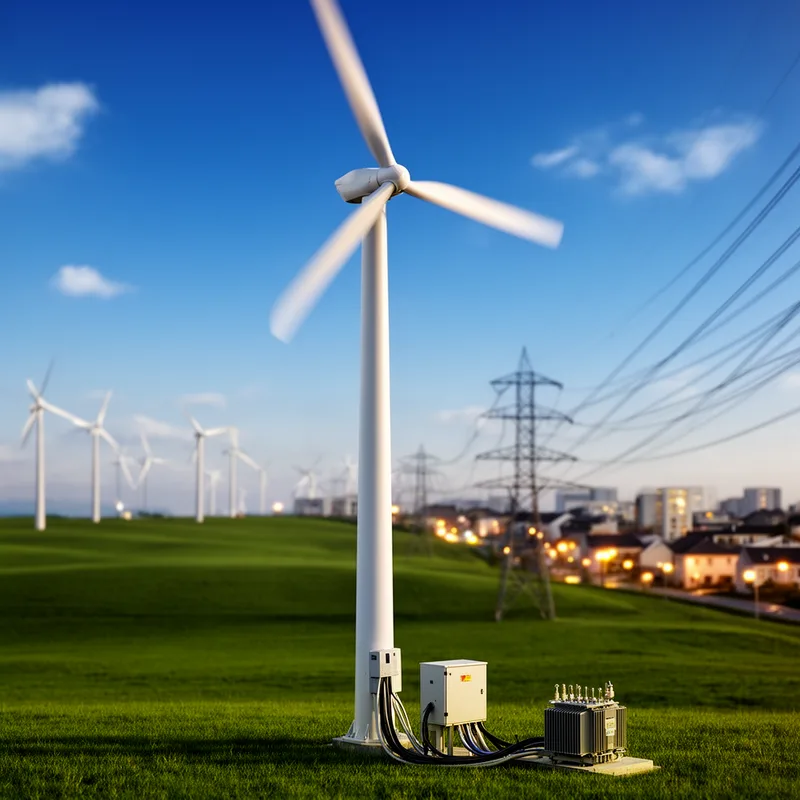
wind generation
 1
3.8
1
3.8

- noun
- /wɪnd ˌdʒɛnəˈreɪʃən/
- Specialized
- That means peak wind generation might be 375 GW.
Examples
-
The company is investing heavily in wind generation to power their new facilities with renewable energy.
-
Our apprentices receive a complete education, including photovoltaic and wind generation.
Blog text (13) -
And in other news, China is increasing its investment in wind generation to 100 GW by 2020.
Blog text (28) -
Follow the link I provided, and download the spreadsheet of wind generation data.
Blog text (32) -
With a large amount of wind generation, a large share of electricity production by gas (or oil) will be ensured.
Blog text (32) -
Wind can only be a backup power supply; in Germany, which has the largest wind generation capacity in Europe, not one conventional power station has been stood down.
Blog text (6) -
The second option is to construct a sufficient number of CCGTs to meet the demand that would be met from wind generation and associated backup.
Blog text (23) -
Proposal 3 does allow the option of wind generation in some out-of-state areas with significantly higher wind speeds and therefore lower costs than in Michigan.
Blog text (34) -
There are some hours where you're missing your forecast by an amount that's equivalent to half of the installed wind generation in these scenarios.
-
The primary results of adding wind generation to an existing grid are: a) reducing the amount of efficient continuous-run baseload generation that the grid can tolerate.
Blog text (32)
Synonyms
 37
2.8
37
2.8
A way to make electricity by using wind to turn large machines like windmills
Surface Forms
Morphology
The compound is transparently compositional: 'wind' (moving air) + 'generation' (the act of producing) directly yields 'production of power from wind', so a learner who knows both words can infer it refers to producing electricity using wind. This logic is common cross-linguistically and follows a standard noun-noun compounding pattern, making it readily understandable to a B1 learner.
Etymology
Wind generation comes from the simple picture of wind turning blades to make electricity. Imagine wind pushing a windmill's blades so a machine generates power, and that's why the phrase means 'the production of electricity using wind'.