
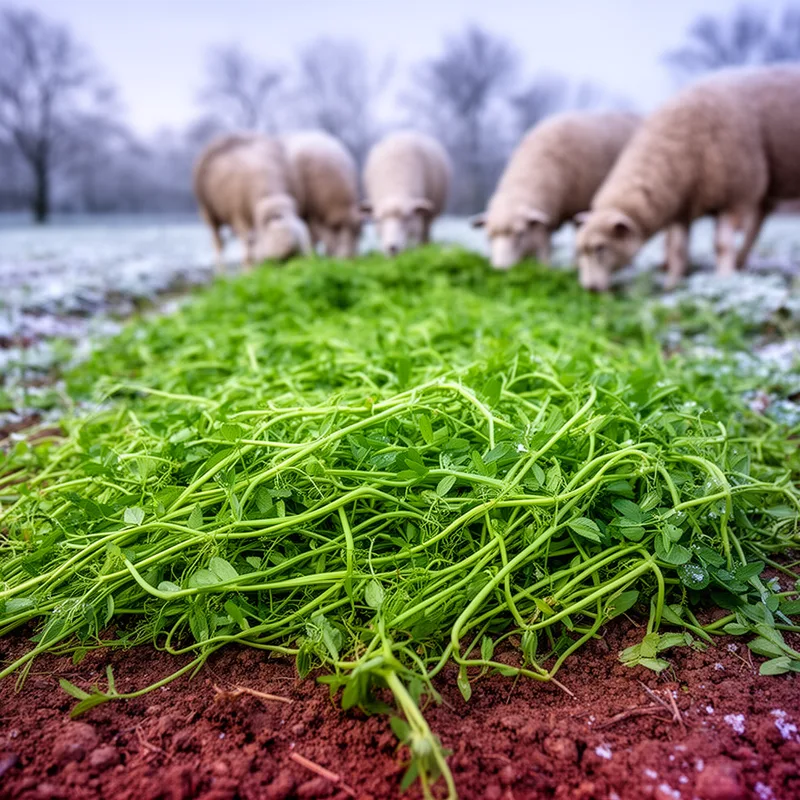
wild winterpea
- noun
- Specialized
- Farmers in the region plant wild winterpea to enrich the soil during the off-season.
Examples
-
Grazing animals often feed on wild winterpea when it is used as a pasture crop.
-
The wild winterpea is valued for its ability to prevent soil erosion.
-
The wild winterpea thrives in warm climates.
-
Farmers often plant wild winterpeas for soil improvement.
-
Farmers in the region plant wild winterpea to enrich the soil during the off-season.
-
Grazing animals often feed on wild winterpea when it is used as a pasture crop.
-
The wild winterpea is valued for its ability to prevent soil erosion.
Synonyms
A winter plant with weak stems used for animal food and to improve soil
A winter plant with weak stems that farmers use to cover soil and feed animals

A winter plant grown as food for animals and to protect soil

A plant with weak stems like a small pea that is grown to cover the soil
Surface Forms
Morphology
wild + winterpea
The noun phrase is compositionally built from 'wild' (not domesticated) plus 'winter' + 'pea' (a pea that is associated with winter), so its meaning as a wild variety of a pea that grows in winter is directly inferable. This follows normal adjective + noun and compound patterns in English, so a B1 learner who knows the constituent words would reasonably understand the MWE.
Etymology
Wild winterpea comes from a simple picture: wild means 'grows on its own', winter is the 'cold season', and pea shows the plant makes small pea-like pods. Because it grows in winter with thin stems and makes a green cover animals can eat, the name fits this low plant farmers use to protect the soil and feed their animals.

