
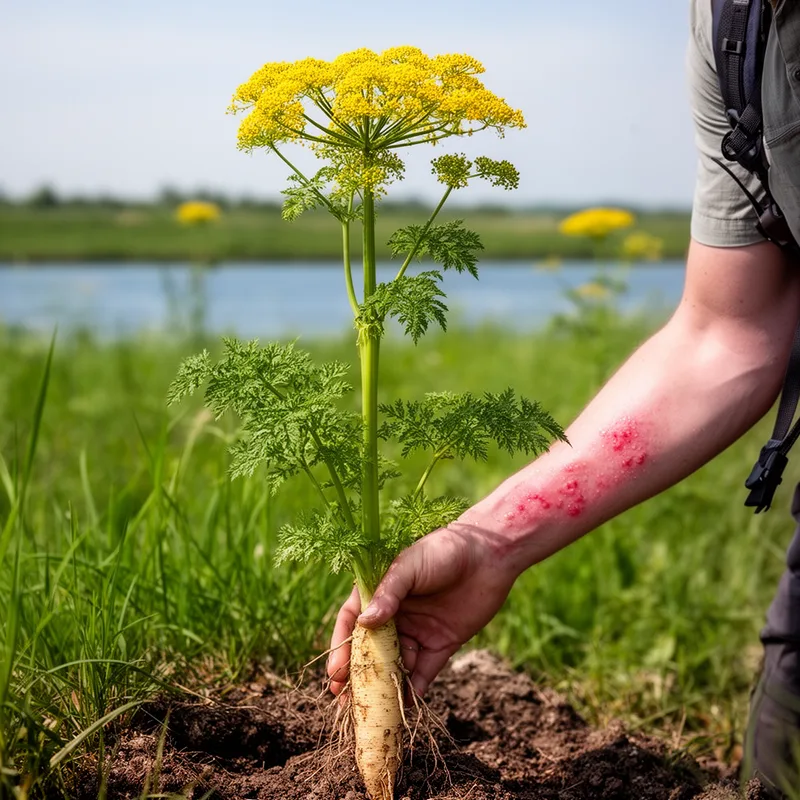
wild parsnip
- noun
- /waɪld ˈpɑːrsnɪp/
- Many hikers avoid touching wild parsnip because its sap can cause skin irritation.
Examples
-
Unlike the domesticated version, wild parsnip has a root that is too bitter to eat.
-
The fields near the river are covered with blooming wild parsnip each summer.
-
The wild parsnip can be found in many fields.
-
Many people mistake wild parsnips for other plants.
-
Many hikers avoid touching wild parsnip because its sap can cause skin irritation.
-
The fields near the river are covered with blooming wild parsnip each summer.
-
Unlike the cultivated variety, wild parsnip features a root that is too bitter to eat.
Synonyms
A wild plant like a parsnip with yellow flowers and a bitter root you should not eat raw
Surface Forms
Morphology
The phrase is a straightforward adjective + noun composition: 'wild' (growing naturally, not cultivated) + 'parsnip' (a root vegetable) yields a parsnip that grows in the wild rather than one cultivated. This compositional pattern is common cross-linguistically and easily derivable by a B1 learner who knows both constituents.
Etymology
Wild parsnip is the wild relative of the garden parsnip; it grows in fields with bright yellow flowers but has a bitter root and sap that can burn the skin. So the name tells you it is 'not for eating' and can be dangerous to touch.

