

wild marjoram
- noun
- /waɪld ˈmɑrdʒərəm/
- I used fresh wild marjoram in my pasta sauce for added flavor.
Examples
-
A sprinkle of wild marjoram enhances the taste of grilled vegetables.
-
Wild marjoram grows in the cracks of the walls.
Fiction book (1993) -
In Mediterranean cuisine, wild marjoram is often used to season meats and stews.
Synonyms

 29
2.4
29
2.4

A herb with a strong smell used to add flavor to food like pizza or sauces
 3
6.5
3
6.5
An herb with small leaves like oregano used to add flavor to food

A plant with strong, scented leaves used to season food
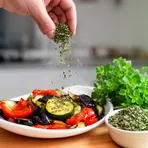
An aromatic herb like oregano used to add flavor to food
Surface Forms
Morphology
The phrase is a straightforward adjective+noun composition: 'wild' (growing naturally) + 'marjoram' (a cooking herb), so a learner who knows both words will understand it refers to marjoram that grows in the wild (commonly used as oregano). This compositional, literal pattern is cross-linguistically common and therefore immediately comprehensible to learners who know the constituents.
Etymology
Wild marjoram comes from the idea of the plant being the wild form of the kitchen herb marjoram, often called 'oregano'. It grew freely on hills and by roads, so people used wild to show it was the wild-growing herb, and today wild marjoram means the common cooking herb with a strong smell.