

wild ginger
- noun
- /waɪld ˈdʒɪŋɡər/
- I found some wild ginger in the forest.
Examples
-
The wild ginger plant grows near the river.
-
Native Americans traditionally used wild ginger as a natural remedy and flavoring.
-
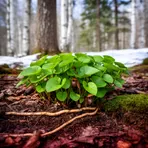
The forest floor was covered in wild ginger, its heart-shaped leaves giving off a spicy scent.
-
You can spot wild ginger along shady woodland trails in early spring.
-
The chef added wild ginger to the soup for an extra burst of flavor.
-
In the shady forest, we discovered patches of wild ginger, known for its pungent aroma.
-
She harvested wild ginger leaves for their medicinal properties during the hike.
Synonyms

A low plant that grows back every year with heart-shaped leaves and roots that smell like ginger

A low-growing North American plant with spreading leaves called wild ginger

A small wild ginger plant with heart-shaped leaves that have a strong smell
A group of small plants like wild ginger that live many years and grow in cool northern regions
Surface Forms
Morphology
The compound 'wild ginger' is a transparent composition meaning essentially 'ginger (a ginger-like plant) that grows in the wild' and this meaning is directly derivable from 'wild' + 'ginger'. While botanically it may refer to different species than cultivated ginger, an average B1 learner who knows both words will readily infer the intended sense; the adj+noun composition is a common, cross-linguistic pattern.
Etymology
Wild ginger gets its name from a clear image: people found a small plant in the woods whose root and leaves smell a bit like the cooking ginger, but it grows wild in the forest. So the name links wild and ginger, and that is why people used it as a 'flavoring' and 'medicine'.

