

wide-angle lens
 5
4.0
5
4.0

- noun
- /ˈwaɪdˈæŋɡəl lɛnz/
- Specialized
- The landscape looked stunning through the wide-angle lens, capturing everything in one frame.
- wide-angle lens (15mm)
- using a wide-angle lens
- 24mm wide-angle lens
Loading YouTube…
Watch on YouTubeJeez, even with my wide angle lens can catch how close we are to these Buffalo.
- Jeez, even with my wide angle lens can catch how close we are to these Buffalo.
- That's like the big difference is the wide angle lens and the portrait.
- I'm I'm liking that here, but we got this wide angle lens that we got to try out.
- No, I was a you know, it, it was a sort of wide angle lens shot that I had of him.
Examples
-
Try a wide-angle lens and include some rocks in the foreground.
Academic text (2009) -
In addition, a videotape machine with a wide-angle lens was used to capture teacher behaviors.
Academic text (1993) -
You would never know that was shot with a wide angle lens from so far back and the detail holds.
-
The video camera, with a wide-angle lens.
-
This is a wide-angle lens.
-
Seen through the wide-angle lens, the rows of passengers were directly below him.
Fiction book (1996) -
The other reason is that wide-angle lenses are generally lighter and easier to maneuver.
Blog text (7) -
And now you have a wide angle lens and the wide angle lens is about twice the field of view as the regular iPhone camera lens by itself.
-
Through the wide-angle lens, we can see Fran, slowly moving down the aisle towards the station.
Fiction book (1996) -
Her pioneering use of the wide-angle lens to capture the scope of massive formations paved the way for generations of filmmakers.
Synonyms
 7
2.9
7
2.9
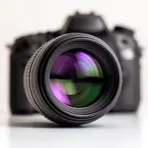
A curved glass or plastic piece that focuses light onto the camera sensor
 1
5.0
1
5.0
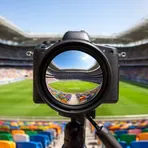
A camera lens that makes a very wide view look curved and distorted
How Wide

Surface Forms
Morphology
wide-angle + lens
The phrase is compositionally built from 'wide' + 'angle' + 'lens' and directly denotes a lens with a wide field of view; a learner who knows 'wide', 'angle' and 'lens' can infer this meaning. The compound form and the concept (a lens that captures a wider scene) are cross-linguistically common and follow standard English compounding patterns, so it will be immediately comprehensible to a B1 learner.
Etymology
Wide-angle lens is named for its parts: a wide angle means the lens can 'see more' to the sides than a normal lens. That's why photographers use it to show whole rooms or big landscapes and why close objects may look larger and the edges a little stretched.