

whole wheat flour
 2
2.5
2
2.5

- noun
- /hoʊl wiːt flaʊər/
- US
- She always chooses whole wheat flour for making bread to ensure it has more nutrients.
- a cup of whole wheat flour
- 1/2 cup of whole wheat flour
- a tablespoon of whole wheat flour
Loading YouTube…
Watch on YouTubeI, I switched from white flour to whole wheat flour.
- I, I switched from white flour to whole wheat flour.
Examples
-
We usually make homemade pizza with whole wheat flour, but this tasted just as good.
Blog text (7) -
Could you tell me the nutritional benefit of almond meal over whole wheat flour?
Blog text (8) -
Can I do this with all whole wheat flour?
Blog text (15) -
And of course some whole wheat flour, which counts.
-
Add brown or white rice that has already been cooked and some whole wheat flour.
Blog text (8) -
I don't see why not; you may need a bit more water, as whole wheat flour might need more.
Blog text (15) -
I keep my whole wheat flour in its original bag and store it in a Ziplock bag.
Blog text (4) -
Improve your bread recipes by using only half the amount of flour that the recipe recommends and changing the other half to whole wheat flour.
Blog text (26) -
The muffins had a trace of that whole wheat flour bitterness.
Blog text (31) -
It also used whole wheat flour; if using white flour, you might be able to cut the kneading time.
Blog text (28)
Synonyms
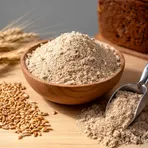
Powder made by grinding whole wheat grain including the bran

A type of flour made from whole wheat that keeps the bran
How Nutritious


Surface Forms
Morphology
The phrase is fully compositional: 'whole' (entire), 'wheat' (the grain), and 'flour' (ground grain) combine straightforwardly to mean flour made from the entire wheat kernel (including bran and germ). This noun + modifier construction is cross-linguistically common and follows regular English composition, so a B1 learner who knows the constituents would readily infer the meaning.
Etymology
Whole wheat flour comes from how the flour is made: the word whole means the entire wheat seed is ground, so the flour keeps the outer parts that give a darker colour, a nuttier taste, and extra 'nutrition'. That's why whole wheat flour means flour made from the whole grain rather than only the white inside.