
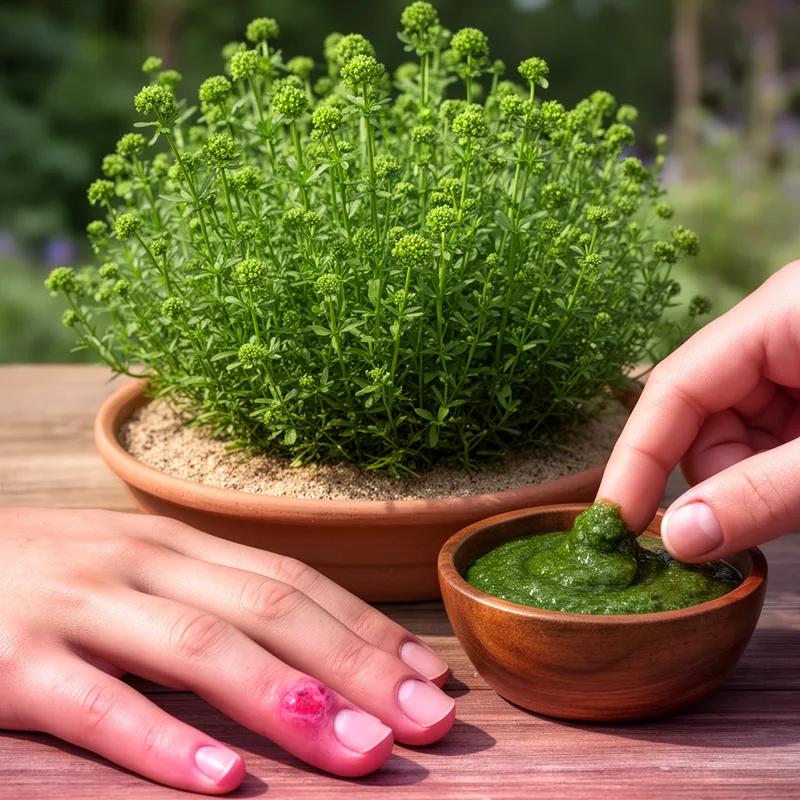
whitlowwort
- noun
- /ˈhwɪtloʊˌwɔrt/
- Archaic
- Historically, whitlowwort was applied as a remedy for infections around the fingernail.
Examples
-
The herbalist recommended an ointment containing whitlowwort for skin irritations.
-
Several species of whitlowwort thrive in warm, sandy soils throughout North America.
-
The whitlowwort blooms beautifully in spring.
-
Have you ever seen a whitlowwort in the wild?
-
In traditional medicine, whitlowwort was often used to treat wounds and infections.
-
The tiny, greenish flowers of whitlowwort attract various pollinators during the summer months.
-
Many herbalists believe that whitlowwort possesses healing properties for minor skin ailments.
Synonyms
Low-growing plants with small flowers that often grow on sandy soil
Surface Forms
Morphology
Etymology
Whitlowwort joins whitlow, an old name for an 'infection around the fingernail', and wort, an old word for 'plant' used in names like St John's-wort. So the plant was once thought to cure whitlows, and its name means a 'plant for whitlows'.

