

white potato vine
- noun
- /ˈwaɪt pəˈteɪtoʊ vaɪn/
- The white potato vine thrives in well-drained soil and full sunlight.
Examples
-
The white potato vine grows well in warm climates.
-
Farmers in Peru cultivate the white potato vine for its tubers.
-
Many gardeners grow white potato vine for its nutritious tubers, but take care because the vines are toxic.
-
The white potato vine produces the common potatoes found in grocery stores.
-
The farmer decided to plant white potato vine in his garden for its delicious tubers.
-
She admired the white potato vine as it climbed the trellis, knowing it would produce many edible potatoes.
-
In the backyard, the white potato vine spread across the ground, preparing to yield a harvest of starchy goodness.
Synonyms

 110
1.0
110
1.0

A plant grown for its edible underground parts that people eat while its leaves are poisonous
 1
1.0
1
1.0
A common root vegetable with pale skin and white flesh used for cooking
 1
1.0
1
1.0
A common white potato grown and eaten in Ireland and other countries
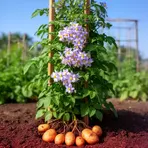
A climbing plant with pretty flowers and small edible potatoes

A plant that grows edible parts under the ground called potatoes

A type of potato from Uruguay grown for eating
Surface Forms
Morphology
This is a straightforward compositional noun phrase (white + potato + vine) where a B1 learner who knows the words can infer it denotes a vine-like plant related to potatoes that is white in some respect. Although specific botanical details (stolons, toxicity) are technical and not fully predictable, the basic referent as a potato-related vine is transparent and follows common modifier+noun composition patterns cross-linguistically.
Etymology
The plant name white potato vine comes from a simple image: a climbing vine that makes potato-like tubers under the soil and has pale or white flowers or skin, so people called it a potato vine. That's why the name today means a vine with edible starchy 'tubers' but poisonous above-ground vines.