

white horehound
- noun
- /ˈhwaɪt ˈhɔrˌhaʊnd/
- The herbalist recommended white horehound tea to help soothe my cough.
Examples
-
Traditional candies are sometimes flavored with extracts from white horehound leaves.
-
Fields of white horehound bloom in the summer, attracting bees to their tiny flowers.
-
The herbalist recommended white horehound for its medicinal properties.
-
Many people enjoy white horehound candy for its unique flavor.
-
The herbalist recommended white horehound tea to help soothe my cough.
-
Traditional candies are sometimes flavored with extracts from white horehound leaves.
-
Fields of white horehound bloom in the summer, attracting bees to their tiny flowers.
Synonyms



 1
9.9
1
9.9
A small herb with a strong smell and wrinkled leaves used for medicine or flavor
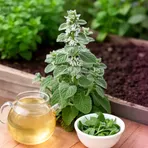
An herb from Europe with hairy leaves and small white flowers used in medicine and to flavor food

A European herb with hairy leaves and white flowers used to make a bitter medicine or flavour
Surface Forms
Morphology
This is a straightforward noun phrase in which the adjective 'white' simply modifies the noun 'horehound' (a specific herb). The combined meaning — the horehound that is white or has white flowers — is directly derivable from the constituents and follows a common cross-linguistic color+noun composition, so a B1 learner who knows both words would understand it.
Etymology
White horehound is named for the plant's pale, hairy look: its leaves and tiny flowers look almost 'white', so people used white and the old name horehound to describe it. Its bitter leaves were often used as a medicine for coughs, so the name now makes us think of a bitter healing herb.