
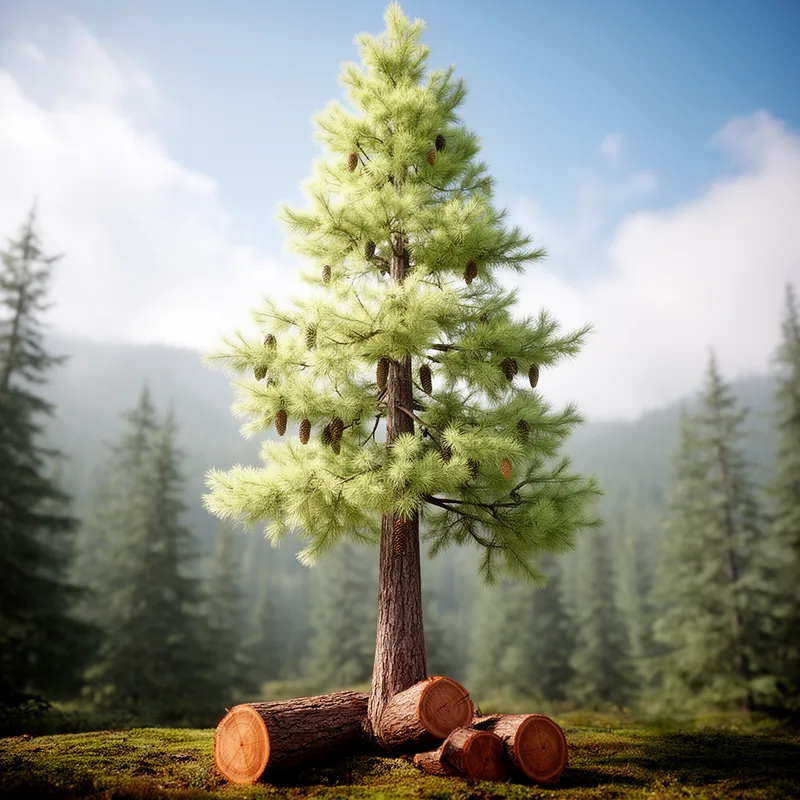
western tamarack
- noun
- /ˈwɛstərn ˈtæməræk/
- US
- In spring, the western tamarack puts out bright green needles that turn golden in autumn.
Examples
-
Lumber from the western tamarack is prized for its strength and durability.
-
The western tamarack is often found in moist mountain valleys throughout the Pacific Northwest.
-
The western tamarack grows abundantly in the Pacific Northwest.
-
Have you seen a western tamarack tree before?
-
In spring, the western tamarack puts out bright green needles that turn golden in autumn.
-
Lumber from the western tamarack is prized for its strength and durability.
-
The western tamarack thrives in wet areas and is a common sight in the forests of the Pacific Northwest.
Synonyms
A tall type of tree from western North America valued for its wood

A tall North American tree with needles that turn golden in autumn and long cones, valued for strong wood

A tall tree from western North America with pale green needles and cones grown for its wood
Surface Forms
Morphology
The phrase is directly compositional: 'western' denotes geographic location/origin and 'tamarack' names a specific larch tree species, so the overall meaning 'a tamarack from the west' is immediately derivable. This adjective+noun pattern is a common, transparent compound in English and other languages, so a B1 learner who knows both constituents would understand it.
Etymology
Western tamarack comes from two simple parts: western, meaning from the 'west' where the tree grows, and tamarack, an old word for a tree known for strong 'wood'. So the name helps you remember it is a tamarack tree found in western North America.

