
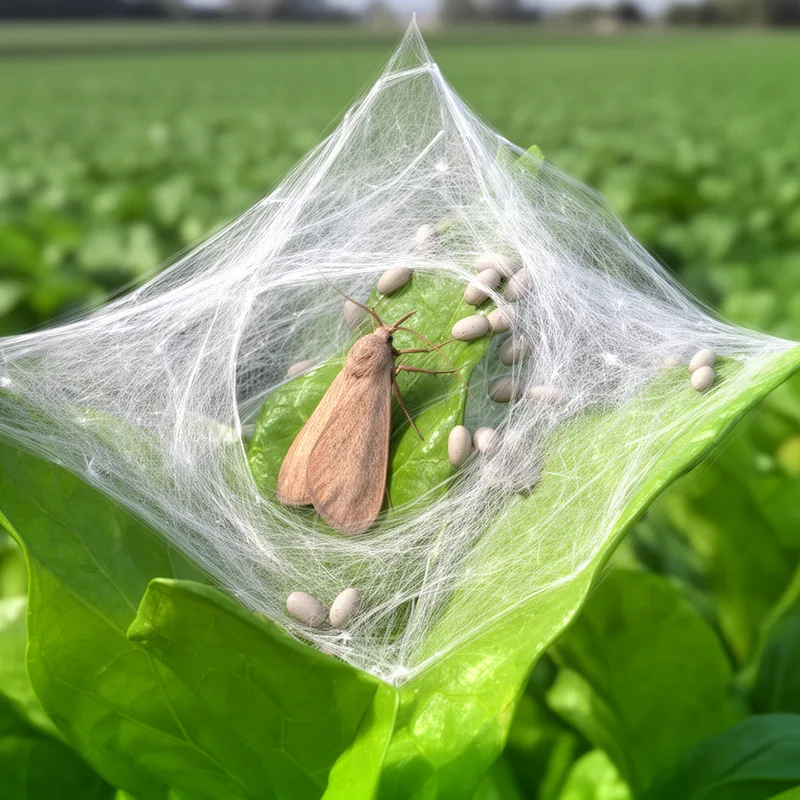
webbing moth
- noun
- /ˈwɛbɪŋ mɔθ/
- The infestation was caused by the webbing moth, which spun silky webs around the leaves.
Examples
-
Each webbing moth weaves a protective web as its shelter and breeding ground.
-
Farmers noticed that webbing moths were damaging their crops by nesting in the fields.
-
Look at that webbing moth!
-
The webbing moth is often found in gardens.
-
Each webbing moth creates a silk web for shelter and protection in its habitat.
-
The webbing moths spun threads that formed a web-like structure on the tree branches.
-
Farmers often find a webbing moth in their fields, where it constructs webs for laying eggs.
Synonyms
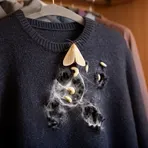
A small pale insect whose young make webs and eat clothes
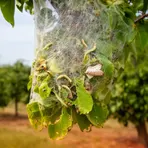
A small insect whose caterpillars make webs on plants and live inside them while eating leaves
Surface Forms
Morphology
The compound is compositionally built from 'webbing' + 'moth', so a learner might infer a moth associated with web-like material (i.e., one that makes or lives in web-like structures). However the supplied sense of 'webbing' (strong woven tape) differs from the 'web/web-like' meaning likely intended here, creating lexical ambiguity and a specialized biological sense that is not fully predictable without exposure. This partial predictability and sense shift make the expression semi-transparent.
Etymology
Webbing moth gets its name from the insect's habit of spinning a fine webbing of silk and living inside it. So the name simply means a moth that makes a web for 'shelter' and to lay eggs.

