
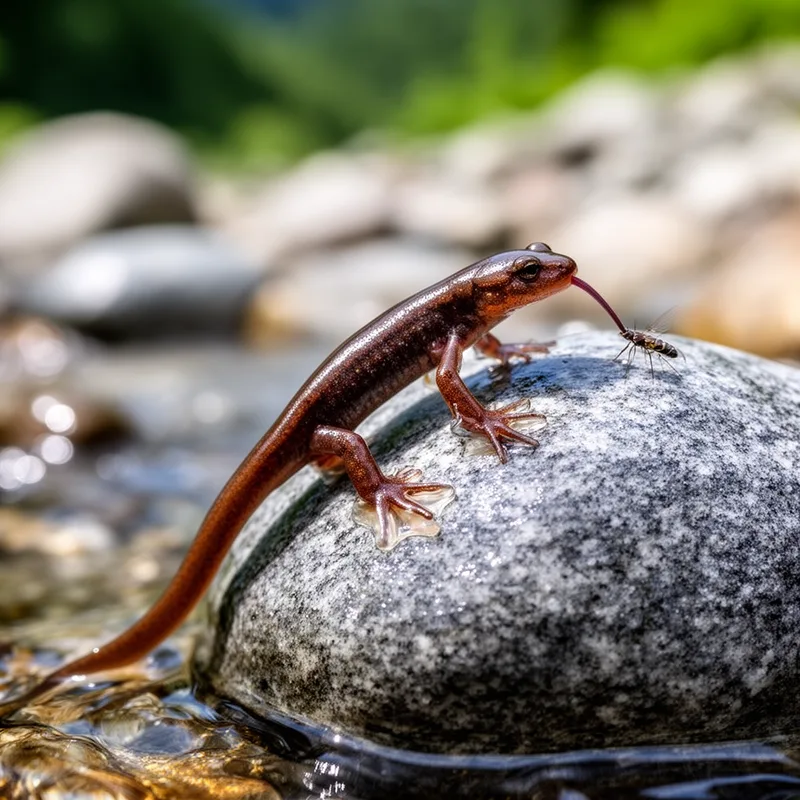
web-toed salamander
- noun
- Specialized
- Researchers observed a web-toed salamander climbing easily across wet, smooth rocks.
Examples
-
The web-toed salamander uses its long tongue to catch insects on slippery stones.
-
Many web-toed salamanders inhabit streams in mountainous regions, where their webbed toes give them a strong grip.
-
The web-toed salamander is fascinating to observe.
-
Look at that web-toed salamander climbing the rock!
-
Many web-toed salamanders inhabit streams in mountainous regions, where their webbed toes give them a strong grip.
-
Researchers observed a web-toed salamander climbing easily across wet, smooth rocks.
-
The web-toed salamander uses its long tongue to catch insects on slippery stones.
How Agile


Surface Forms
Morphology
The meaning is fully compositional: 'web-toed' (having skin connecting the toes) modifies 'salamander' to indicate a salamander that has webbed toes. This straightforward adjective+noun combination follows common cross-linguistic patterns, so a B1 learner who knows both constituents will readily infer the intended referent (even if additional specific traits in the full definition are not deducible).
Etymology
Web-toed salamander: The name web-toed salamander comes from the animal's web-toed feet, where the toes are joined by thin skin like little paddles. This picture helps you remember that these salamanders use their 'webbed toes' to 'grip' wet rocks and 'climb' easily.