

weakfish


 1
9.1
1
9.1
- noun
- /ˈwiːkˌfɪʃ/
- Specialized
- The chef prepared a delicious dish using fresh weakfish caught that morning.
Examples
-
Pound nets caught bluefish from May into October, and scup and weakfish from July into October.
Academic text (1990) -
Usually, the next most abundant fishes were bluefish and weakfish.
Academic text (1990) -
From July into October, they caught many weakfish also.
Academic text (1990) -
The virtual disappearance of weakfish along the Eastern Seaboard could be related to declining menhaden.
Blog text (32) -
One plate (ill. 4) depicts an osprey flying with a large weakfish in its talons.
Academic text (1995) -
They caught weakfish by trolling small spoons or sandworms hooked onto spinners (Zeisel, 1988).
Academic text (1990) -
The fish caught were alewives, bluefish, croakers, eels, flounder, mullet, and weakfish, besides horseshoe crabs.
Academic text (1990) -
Undoubtedly, the principal cause of declines in some species, such as bluefish, butterfish, menhaden, scup, silver hake, spot, and weakfish, was heavy fishing by commercial and sport fishermen in the ocean before they entered the bay.
Academic text (1990) -
Eels, flounder, kingfish, scup, shad, sheepshead, spot, weakfish, and an occasional Atlantic salmon, Salmo salar.
Academic text (1990) -
The usual catch was 8-10 bushels of fish, including alewives, bluefish, flounder, menhaden, mullet, shad, striped bass, and weakfish.
Academic text (1990)
Synonyms

A saltwater fish called weakfish that lives near North American coasts and people catch for food and sport
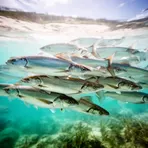
A group of sea fish like sea trout or weakfish found along coasts of the Americas
Compounds
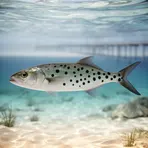
A fish with dark spots on its back and sides that lives near the US Gulf and southern Atlantic coasts
Surface Forms
Morphology
Etymology
The word weakfish comes from the simple English parts weak and fish because this fish has a very delicate mouth that often tears on a hook, so fishermen called it 'weak' for its fragile mouth. That's why the name fits the fish people catch and eat and why anglers handle it carefully.