

wayfaring tree
- noun
- UK
- The wayfaring tree blooms beautifully in spring.
Examples
-
She researched the medicinal uses of the wayfaring tree for a local gardening project.
-
Birds are drawn to the berries of the wayfaring tree as they ripen from red to black.
-
The wayfaring tree blooms in late spring, producing attractive clusters of white flowers.
-
Many wayfaring trees line the old country roads.
-
The wayfaring tree is known for its beautiful white flowers that bloom in spring.
-
During our hike, we spotted a wayfaring tree with clusters of red berries along the trail.
-
In the garden, the wayfaring tree adds a vibrant touch with its seasonal color changes.
Synonyms
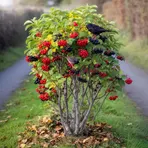
A European bush that loses its leaves and has red berries that turn black

A bush that loses its leaves and has red berries that turn black when ripe

A strong bush that grows by roads, loses its leaves and has red berries that turn black
Surface Forms
Morphology
The phrase is compositionally transparent: 'wayfaring' (traveling along paths/waysides) plus 'tree' yields the readily inferable idea of a tree that grows by waysides. Although the botanical referent is actually a shrub and 'wayfaring' is somewhat literary, a B1 learner who knows both constituents can infer the general meaning.
Etymology
Wayfaring tree may come from the simple image of a wayfaring person and a tree that grows by the road. Because the shrub often stands along paths where 'travellers' could pick its berries or use its leaves for medicine, the name came to mean a roadside shrub.

